

A 40-liter pack often fits a week’s essentials, but packed dimensions, airline rules, and loaded fit should guide the final choice. A seven-day city trip can fit in 40 liters with laundry, while a cold three-night hike can need 60 liters for shelter and insulation.
This backpack size guide for travel covers trip style, gear bulk, carry-on rules, and body fit for travelers moving between airports, cities, and trails.
Capacity, Dimensions, and Usable Space Set Different Limits
Liters tell you how much internal volume a pack holds, but they do not describe its exterior shape. Your bag can hold 40 liters and still exceed an airline sizer through extra depth, a tall frame, or stuffed outer pockets.
Internal Volume Loses Room to Structure
A listed 40 liters includes space shaped around frames, curved back panels, laptop sleeves, thick foam, and fixed organizer pockets. Your usable main compartment can feel much smaller in travel packs with padded electronics sections.
Compression straps tighten a half-full load, but they cannot make room for a bulky down jacket or rigid camera cube. Pack around your bag’s real shape rather than its label, especially where curved panels narrow the bottom corners.
Liters measure internal volume. Exterior height, width, and depth control whether your packed bag fits an airline sizing bin. Those two figures answer different parts of the same packing problem.
Exterior Measurements Control Airline Access
Airline staff do not inspect a volume label. They check carry-on dimensions, weight, and whether your backpack slides into the metal sizer without forcing the sides inward.
A tall, narrow 40-liter pack can fit a carry-on bin more easily than a short, deep 40-liter pack. Depth becomes the trouble spot after outer pockets hold a jacket, cable pouch, or water bottle.
Your packing list should set the capacity ceiling. Empty space invites spare shoes, extra clothing, and loose items that turn a balanced load into a heavy lump against your back.
For your trip, usable space matters more than a large printed number. A rectangular main compartment can hold packing cubes efficiently, while a curved pack can waste space around rigid items.
Once usable volume is clear, the gear and conditions you carry determine how much of it you actually need.
Trip Demands Set the Capacity You Need
Once you know the bag’s usable space, list every item that must travel with you. Trip duration matters, yet climate, lodging, laundry, food access, and activity gear can shift your capacity need by 15 to 25 liters.
| Trip condition | Space pressure | Capacity effect |
|---|---|---|
| Warm city stay with hotel laundry | Light clothing and few layers | 30 to 40 liters can cover several days |
| Weekend with formal clothing | Dress shoes and wrinkle-prone garments | 40 to 50 liters gives safer room |
| Wet shoulder-season hiking | Rain shell, insulation, shelter, dry storage | 50 to 70 liters fits trail systems |
| Remote camping without resupply | Food, water treatment, fuel, sleep gear | Capacity rises with each day away |
| Business trip with electronics | Laptop, chargers, work clothing | Panel access matters as much as liters |
Cold and wet conditions consume space fast. A synthetic puffy, rain pants, spare socks, and a warmer sleeping bag take far more room than three lightweight shirts for a warm destination.
For how many liters backpack for a trip, start with the bulkiest required item. A tent, laptop, insulated jacket, dress shoes, or camera insert can shape your choice more than the number of nights away.
Packing Habits Change the Capacity Math
- Laundry access: Washing two shirts halfway through a week can keep your travel backpack capacity near 40 liters.
- Water carry: Two liters of water add weight and fill side pockets needed for trail days.
- Camera equipment: A padded camera insert protects lenses but takes rectangular space from clothing.
- Extra footwear: A second pair of shoes can consume 6 to 10 liters, based on shoe size and shape.
- Food storage: Multi-day hiking food needs a planned volume beside your sleeping bag and shelter.
Your base weight is the load before food and water. A minimalist traveler carrying one pair of shoes and compact toiletries can choose a smaller pack than you would need for climbing gear, ski layers, or work outfits.
Liter Ranges Match Common Trip Types
After you identify the bulky gear, liter ranges become useful shorthand rather than strict rules. Travel backpack capacity by trip length works best as a starting point, not a fixed answer, because weather and equipment alter every load.
| Capacity range | Strong fit | What it carries |
|---|---|---|
| 15 to 30 liters | Day trips, commuting, urban sightseeing, day hikes | Water, food, light shell, compact layers, small electronics |
| 30 to 50 liters | Minimalist overnights, weekends, laundry-based travel | Clothing capsule, toiletries, laptop, compact shoes |
| 50 to 70 liters | Multi-day hiking and camping | Shelter, sleep system, food, insulation, trail layers |
Small Packs Reward Disciplined Packing
A 15 to 30-liter backpack suits a museum day, commuter train, or six-mile hike with lunch and water. You can fit a rain shell and fleece, but a bulky sweatshirt plus a full camera kit crowds the interior fast.
For a two-night summer trip, 30 to 50 liters leaves room for packing cubes, a toiletry kit, and a light jacket. A 40-liter bag is enough for travel where your clothing stays compact and laundry is available.
Your clothing choices set the limit inside this range. Wearing boots during transit and packing one pair of lightweight shoes can leave several liters open for a laptop or rain layer.
Large Packs Serve Full Outdoor Systems
A 50 to 70-liter hiking pack earns its size through shelter, a sleeping pad, food, and changing weather. Your hip belt matters far more here because food and water can add 10 pounds or more during a day outdoors.
A week-long trip does not automatically need a 60-liter bag. Repeating pants, washing shirts, and wearing your heaviest shoes in transit can keep a seven-day urban load close to 40 liters.
Weather and seasonal clothing change that answer fast. Your warm-weather city load can fit in 35 liters, while a wet shoulder-season route can need 15 to 25 more liters for insulation, rain gear, and dry storage.
Those ranges are only a starting point, since access, weather protection, and carry style can matter as much as volume.
Pack Design Should Match Your Itinerary
Capacity tells you how much fits, but access and suspension shape how the load feels at a hotel door or on a steep trail. Travel backpacks, hiking backpacks, and hybrid packs solve different problems at the same liter count.
Travel Packs Favor Access and Organization
Panel-opening packs unzip like luggage, so you can reach a shirt from the bottom without emptying everything above it. Osprey Farpoint-style travel packs suit airport transfers, hostels, trains, and frequent repacking.
Your laptop, cables, passport, and toiletries stay easier to separate in zip compartments. That organization adds fabric and padding, which explains why usable space can feel tighter than the stated volume.
A travel pack works well where your day involves terminals, stairs, train racks, and hotel rooms. You gain quick access to small items, though a padded laptop section can crowd clothing near the back panel.
Hiking Packs Favor Load Transfer
Trail packs use frames, shaped harnesses, broad hip belts, and load lifters to move weight toward your hips. Deuter and Gregory build numerous models around this suspension style because shoulder-only carrying becomes tiring over distance.
External attachment points matter on the trail. Trekking poles, wet rain gear, foam pads, and a helmet need secure locations that do not swing against your back.
Your hiking load changes through the day as food and water disappear. A structured frame keeps dense items close to your torso, which reduces backward pull and helps the hip belt carry more weight.
Hybrid Packs Fit Mixed Trips
A hybrid works for a flight, several city nights, and day hikes that do not need a full camping load. You gain a more structured harness than a suitcase-style pack, though you give up some trail ventilation and some hotel-friendly organization.
In-store fitting at REI can involve sandbags because a loaded pack exposes flaws that empty shoulder straps hide. Your real trip gear gives a more useful result at home, especially with a laptop, shoes, and toiletries inside.
A home trial also reveals whether the pack keeps its dimensions once soft gear fills every compartment.
Carry-On Access Depends on Packed Shape
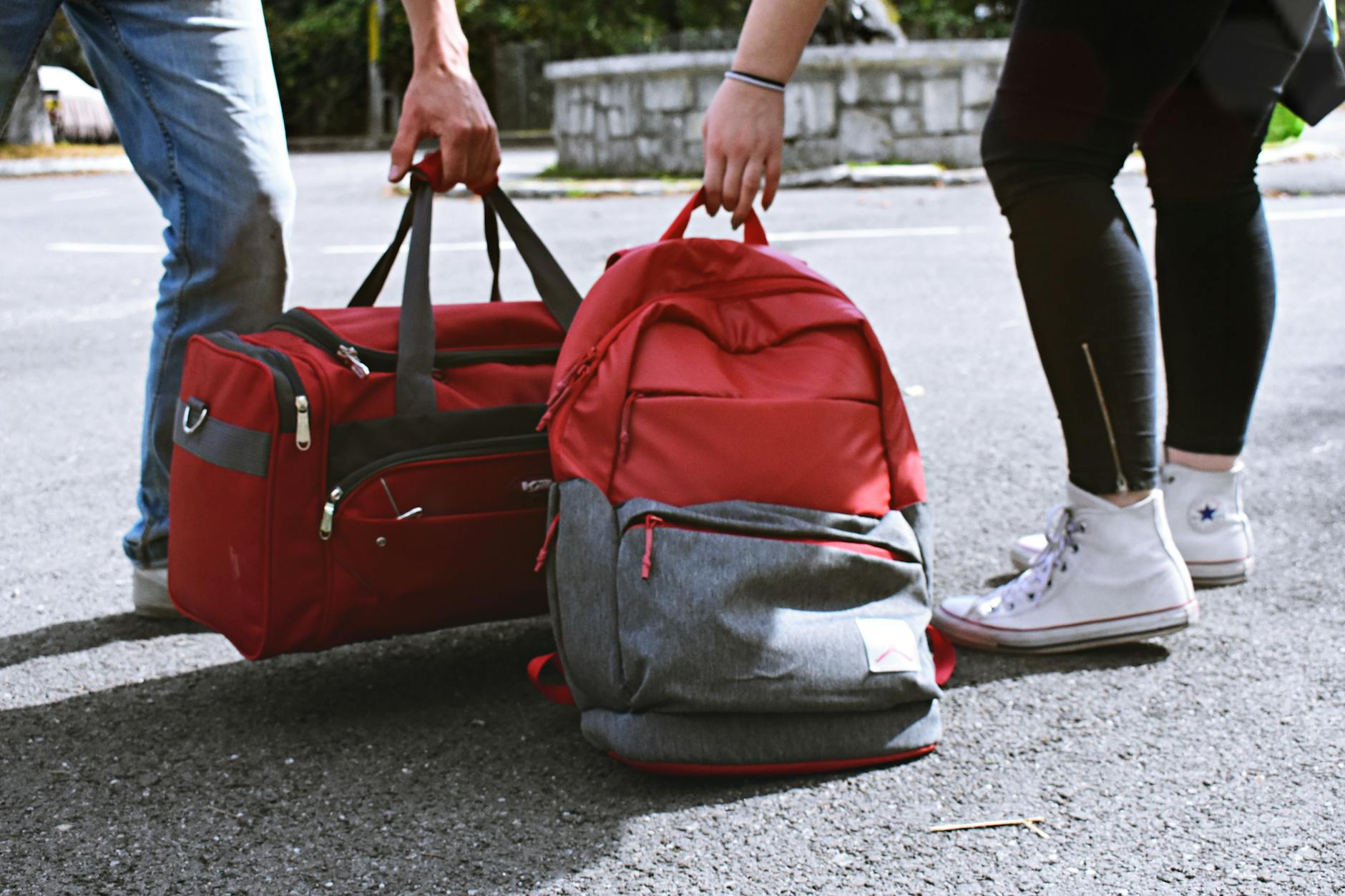
A 40-liter badge does not grant access to an overhead bin. Carry-on backpack size limits vary by carrier, and airlines can enforce exterior measurements, weight limits, or both at the gate.
Check the published packed dimensions against the carrier listed on your itinerary, including regional flights. IATA shares baggage guidance, yet your airline’s stated allowance controls your trip.
Soft Packs Can Expand Beyond Their Label
An overfilled soft-sided bag bulges at the front panel and side pockets. That bulge can push depth past the stated measurement even though the backpack started as a carry-on-focused model.
Pack the bag fully, close every zipper, then check height, width, depth, and weight. Your airline judges the filled object rather than the empty product listing.
A personal item allowance is smaller than a carry-on allowance and fits beneath the seat. Your bag should match published personal item dimensions rather than relying on a 25-liter daypack label.
Security screening rules cover what can pass through screening, while airlines set bag size and weight. Liquids, batteries, and sharp items can change your packing order, as explained in TSA guidance.
A Loaded Fit Test Confirms Your Choice
The final check happens with weight inside the pack rather than while it hangs empty on a store wall. Fit depends more on torso length and hip-belt placement than on your height or the backpack’s overall length.
Torso Length Sets Harness Placement
Find the C7 vertebra by tilting your head forward and locating the bony bump at the base of your neck. Find the iliac crest by placing your hands on the top edge of your hip bones, then run a flexible tape between those points.
That measurement helps you select a harness range. Short-torso and women’s-specific models can have a shorter back panel, narrower shoulder spacing, and hip-belt shapes that better suit your build.
How to measure backpack torso length starts with those two landmarks, not your full standing height. Your torso measurement helps prevent shoulder straps from sitting too high or a hip belt from resting above the hip bones.
A Loaded Checklist Reveals Fit Problems
- Hip-belt position: Center the padded belt over your hip bones so it carries most of the load.
- Shoulder contact: Set straps to lie smooth against your shoulders without gaps, pinching, or downward pull.
- Load lifter angle: Tighten upper straps enough to steady the pack without pulling weight off your hips.
- Sternum strap: Use light tension to stop shoulder straps from spreading without squeezing your chest.
- Walking check: Walk stairs for 10 minutes with your full load and watch for sway, hot spots, or neck strain.
Pack at home before the return window closes, using your real clothing, toiletries, electronics, and trip gear. Your test load shows whether you need fewer items, a different packing order, or more usable space.
Start with dense items near your back and low in the pack. Your water, camera gear, and food should not hang far from your spine, because outward weight pulls your shoulders backward.
Final Packing Decisions Start With the Load
Your smartest choice starts with the gear, then moves through dimensions and fit. Choose the smallest capacity that holds essential items inside the pack, works with your transportation rules, and places most weight on your hips rather than your shoulders.
A 40-liter travel backpack can cover a week in a warm city with laundry and compact clothing. Your three-night hike in cold rain can need 50 to 70 liters because shelter, food, insulation, and dry storage take far more room.
Choose the right backpack size after loading the exact items you plan to carry. Your home test reveals more than a product label because it shows packed depth, empty pockets, awkward gaps, and pressure points on your body.
FAQ
What backpack size do you need for a weekend trip?
A 30 to 50-liter pack suits many weekend trips. Your 35 to 40-liter pack can hold compact clothing, toiletries, and a light outer layer, while cold-weather layers, dress shoes, camping gear, or rigid equipment can push the load closer to 50 liters.
How many liters should a backpack be for a one-week trip?
A one-week city trip can fit in 30 to 50 liters with repeated outfits and laundry access. Your volume rises toward 50 liters or more with cold weather, business clothing, camera equipment, or no washing option.
Is a 40L backpack large enough for international travel?
A 40-liter backpack works for numerous domestic and international trips with a compact packing list. Your bag still needs packed dimensions and weight that match the airline, because a 40-liter label does not prove carry-on acceptance.
What size backpack qualifies as a carry-on bag?
Carry-on limits differ among airlines, so your bag must match the carrier’s current height, width, depth, and weight rules. Check dimensions with the backpack fully packed because soft fabric and loaded pockets can extend beyond the listed shape.
How do hiking backpack sizes differ from travel backpack sizes?
Hiking backpacks run larger for multi-day trips because they carry shelter, food, sleep systems, water, and weather layers. Your travel backpack can stay smaller where laundry, lodging, and compact clothing reduce the amount of gear you carry.
Should I choose a larger backpack than I think I need?
Pack lighter before moving to a larger backpack. Your bigger bag can invite extra items and weaken load distribution, while a smaller pack sets useful limits as long as shelter, food, water, and essential gear still fit safely inside.
