

A battery-powered fan changes the feel of a tent, especially during a still, humid evening or a campsite without a nearby outlet. I’ve focused on practical details such as runtime, charging options, lighting, mounting, and packability. The strongest camping models combine usable airflow with enough flexibility for bedside circulation, cooking, travel days, and emergency preparation.
Personal fans serve a different purpose, but several earn a place here through their compact size or long battery life. The list includes tent-focused solar units, hands-free neck styles, slim handheld models, and high-speed options for hot afternoons.
A Quick View Of The Lineup

JXTKD Solar Tent Fan 10000mAh, 4-Speed
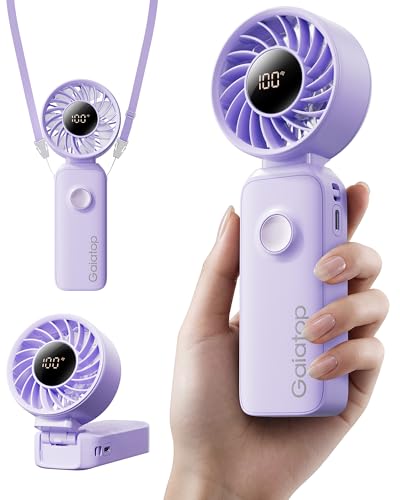
Gaiatop 3-in-1 Neck Fan

Aecooly Slim USB Fan

JXTKD Solar Tent Fan 10000mAh, 4-Speed

JXTKD Solar Tent Fan 10000mAh, 3-Speed

JXTKD Solar Tent Fan 10000mAh, 4-Speed

JXTKD Solar Tent Fan 10000mAh, 4-Speed

Aecooly Turbo Fan 5000mAh

VVTMROM Pink 3-in-1 Mist Fan, 30,000 RPM, 100 Speeds, LED Display
A Breakdown Of The Leading Choices
I favor this model for a tent where cooling, lighting, and off-grid charging need to live in one compact device. The 10,000mAh battery is measured in milliampere-hours, a battery-capacity unit, and gives the fan more staying power than the smaller personal options here.
On a calm night, I’d expect the low setting to carry the longest and reserve the faster settings for short bursts. It feels more purpose-built for shared campsite airflow than the personal styling of the Gaiatop 3-in-1 Neck Fan.
The Practical Payoff
- Four airflow levels cover quiet sleep and stronger circulation.
- Solar and USB Type-C charging suit campsites and vehicle travel.
- The integrated LED reduces the need for a separate bedside light.
- A 10,000mAh battery supports extended use between charging opportunities.
Things To Consider
- Solar charging depends on available sunlight, so Type-C charging remains important.
- The tent light and fan together reduce runtime, making speed selection worth planning.
Key Specs
Built With In Mind
Multi-day tent campers and RV travelers benefit most from the long battery, flexible charging, and integrated light.
Where A Sibling Pick Shines
The JXTKD Solar Tent Fan 10000mAh, 3-Speed serves campers who prioritize adjustable tabletop and hanging placement.
I see the strongest case for this fan away from the sleeping area. Neck, handheld, and desktop formats make it useful for walking to the washroom, sitting beside the picnic table, or cooling down after a hike.
The listed runtime reaches 18 hours on one charge, though actual duration depends on the selected mode. Compared with the JXTKD Solar Tent Fan 10000mAh, 4-Speed, it targets the person rather than the entire tent.
Positive Takeaways
- Hands-free neck use leaves both hands available for campsite tasks.
- Desktop placement reduces the need to hold a fan during meals.
- Up to 18 hours of listed cooling suits long travel days.
Practical Considerations
- It lacks a solar panel, tent light, and tabletop stand for suspended airflow.
- The smaller personal format may circulate air around one person without ventilating a whole shelter.
Made For
Hikers, festivalgoers, and campers who want cooling while walking or handling gear benefit from its flexible format.
Another Choice May Suit
The JXTKD Solar Tent Fan 10000mAh, 4-Speed is a stronger fit for stationary circulation inside a tent.
Packability drives my view of this model. Its thin handheld body suits a jacket pocket, daypack, or vehicle console, making it practical for a camper who wants personal cooling without carrying a larger fan.
The slim profile looks less substantial than the JXTKD 10,000mAh tent units, but that compactness is the point. Listed runtime reaches 24 hours, with the lower setting expected to last longer during a quiet evening or travel day.
A Few Highlights
- The narrow body takes up little backpack or pocket space.
- USB recharging supports use across vehicles, cabins, and campsites.
- Up to 24 hours of listed cooling favors travel days and light use.
Small Caveats
- Handheld use requires holding the unit, unlike a neck or tabletop model.
- Its small size makes it better for personal cooling than broad tent circulation.
- Owners still need to wipe the narrow intake and body before packing it after dusty use.
Quick Facts
Travel Ready
Light packers and day hikers who value low-volume storage benefit most from its slim construction.
Reach For A Different Pick
The Gaiatop 3-in-1 Neck Fan offers hands-free use for campers who frequently walk around camp.
The orange version shares the same core platform as the first JXTKD model, so the decision comes down largely to finish and listing availability. I would choose it for a tent where a brighter unit is easier to locate after dark.
Solar charging, USB Type-C, four speeds, and an LED cover the major camping needs in one body. Compared with the Aecooly Slim USB Fan, it sacrifices some portability for shared-space cooling and built-in lighting.
Standout Benefits
- Low-speed runtime is listed at up to 13 hours for quieter overnight use.
- High speed offers a shorter, stronger burst for stuffier tent moments.
- The LED can replace a separate lamp on a compact camp table.
- Dual charging suits both outdoor solar exposure and wired replenishment.
Where It May Fall Short
- Solar input varies with sun exposure, cloud cover, and panel placement.
- Using the LED with the fan lowers the available runtime.
Right Fit For
Orange-fan enthusiasts and tent campers needing airflow plus a compact light benefit from this version.
A Better Fit Elsewhere
The JXTKD Solar Tent Fan 10000mAh, 3-Speed offers a different mounting format for tabletop or suspended use.
Mounting flexibility gives this three-speed model a distinct role. The stand folds through 180 degrees for tabletop placement, while the rear hook allows suspension from a tent pole or suitable branch.
For a camper tired of balancing a fan on a crate, hands-free positioning may be worth the reduced speed range. Its tough shell and resistance to minor splashes, dust, and bumps also suit roadside and trail-side use.
Strengths Worth Knowing
- Adjustable stand supports tabletop airflow at different angles.
- The rear hook creates hands-free placement near sleeping areas.
- Solar and Type-C charging support several campsite routines.
- Listed full-charge runtime ranges from about 5 to 10 hours.
Trade Offs
- Three speeds provide less adjustment than the four-speed JXTKD variants.
- Solar charging is best treated as a supplement rather than the only power plan.
- Dust caught around the hinge may need occasional cleaning.
Technical Highlights
Who It Suits Best
Camps who value hanging or tabletop hands-free airflow benefit most from this mount design.
Swap It Out When
The JXTKD Solar Tent Fan 10000mAh, 4-Speed is the better match for campers wanting finer airflow control.
The green-and-black finish immediately separates this version visually, which matters for campers who coordinate equipment or dislike a fan that disappears against dark gear. Functionally, it remains close to the first JXTKD model.
I would expect the same 10,000mAh battery, four airflow levels, Type-C input, solar supplement, and LED to serve an overnight tent or RV setup. The listed 13-hour low-speed figure favors quiet use over daytime blasting.
Key Advantages
- Four speeds allow quiet circulation or a stronger short-term setting.
- Solar and Type-C inputs give campers two replenishment methods.
- The LED adds useful light without requiring another compact lamp.
Worth Noting
- The color distinction offers no functional change from the other four-speed JXTKD versions.
- The fan and light together are listed at roughly 3.4 hours.
- Cleaning the solar surface and vents helps maintain practical outdoor performance.
Built With In Mind
Style-conscious campers who prioritize four-speed control and dual charging favor this finish.
Consider Something Else When
The Aecooly Turbo Fan 5000mAh serves personal use where compact airflow matters more than tent lighting.
Orange-and-black styling rounds out a list crowded with similar solar tent fans. I treat this as a straightforward all-purpose option for a family kit where charging flexibility and a bedside light are both useful.
Four speeds cover the spectrum from sleep-level circulation to a stronger boost, and the 10,000mAh battery makes the unit less dependent on frequent charging than a small handheld model. It shares the JXTKD platform’s broad appeal without an unusual mounting system.
Good Reasons To Consider
- Up to 13 hours at low speed favors a long evening of gentle circulation.
- Solar charging supports daytime replenishment during suitable weather.
- USB Type-C allows use with compatible power banks and campsite power setups.
- The integrated light keeps the sleeping area simpler and less cluttered.
- Four speeds make it easier to tune airflow across changing tent temperatures.
Honest Caveats
- Its listed high-speed runtime is about four hours, much shorter than low-speed use.
- Solar charging alone may be slow in weak or intermittent sunlight.
Feature Facts
Family Friendly
Family campers appreciate a single device that combines adjustable airflow, charging flexibility, and nighttime lighting.
Not Your Match When
The Aecooly Slim USB Fan fits backpack-focused campers who value low weight over shared tent cooling.
Five speed levels give this handheld model finer personal-airflow control than the three-speed camping fan in the middle of the list. Its 5,000mAh battery is smaller than the JXTKD units, yet the claimed 22-hour maximum keeps it viable for long excursions.
I’d favor it for hot walks, beach afternoons, and crowded camp paths where direct airflow around the face matters more than lighting the tent. Against the Aecooly Slim USB Fan, this model prioritizes speed range over a slim profile.
What Stands Out
- Five speeds cover gentle airflow through a stronger gust.
- Up to 22 hours of listed runtime supports extended daytime use.
- The handheld format is simple to carry between vehicles and campsites.
Potential Drawbacks
- A handheld unit lacks hands-free neck or tabletop placement.
- The 5,000mAh capacity is half that of the 10,000mAh JXTKD camping models.
- There is no listed solar panel or integrated camping light.
On-The-Go Choice
Travelers and campers on hot excursions benefit from five speeds and portable personal cooling.
Look Elsewhere When
The JXTKD Solar Tent Fan 10000mAh, 4-Speed is the better option for overnight tent lighting and off-grid charging.
This is the most technically elaborate personal option here, combining a 30,000-RPM fan, 100 speed settings, an LED display, and cooling mist. RPM measures rotational speed, so the headline figure points to a high-speed motor rather than greater battery capacity.
Its three formats cover neck, desktop, and handheld use, which broadens its appeal beyond camping. The 30ml tank supplies roughly 30 to 60 minutes of continuous spray, making it most useful during hot breaks outside a tent.
A Favorable Mix
- Two spray levels offer adjustable mist for hot outdoor periods.
- The 30,000-RPM motor and 100 settings provide very granular speed adjustment.
- Neck, desk, and handheld modes cover several daily uses.
- The LED display makes the active setting easier to identify.
- Pink styling gives the unit a distinctive travel-accessory appearance.
Less-Strong Areas
- Mist runtime is much shorter than the stated battery-driven fan runtime.
- The water tank requires careful filling, drying, and storage after use.
- It does not offer the solar charging or tent lighting found in the JXTKD models.
Technical Reference
Specialty Choice
Beach travelers, festivalgoers, and campers seeking cooling mist benefit from its spray-focused design.
Where Another Pick Shines
The JXTKD Solar Tent Fan 10000mAh, 4-Speed is the better fit for whole-tent circulation and overnight lighting.
What Matters Before Taking a Portable Fan Outside
Runtime and charging fit
Milliampere-hours indicate battery capacity, but runtime also depends on motor size, fan speed, lighting, and solar conditions. Tent campers benefit from a 10,000mAh class unit and dual charging; day travelers may find a smaller handheld battery easier to manage.
Airflow versus personal cooling
A tent fan should move air across a sleeping area, while a neck or handheld model serves the person using it. A broad enclosure needs stationary placement and stronger circulation, whereas warm-weather walkers often value hands-free or low-volume designs.
Placement and packing
Folding stands, hooks, desktop bases, and slim bodies determine how easily a fan fits into camp life. Check the packed dimensions alongside charging-cable space, and account for a water tank or neck-worn structure when packing limited storage.
Outdoor maintenance
Solar panels collect dust, vents attract debris, and mist tanks need to dry after use. Keep charging surfaces clear, wipe the housing after dusty trips, and dry the reservoir before storage to reduce residue and corrosion concerns.
Common Mistakes When Choosing Camp Cooling Gear
Wrong Turns To Avoid
Maximum runtime can be misleading because the lowest speed usually lasts longest. Mist, LED use, and high airflow also reduce operating time, so compare the workload rather than the largest headline figure. A large battery also adds bulk that may not suit a small daypack.
The Upgrade Payoff
Higher-end options add broader speed control, longer capacity, or mounting flexibility. Those improvements matter for multi-day trips, shared tents, and hot locations; a compact personal model remains more practical for short walks and light packing.
Frequently Asked Questions
How long does a camping fan usually run?
Runtime varies with battery capacity, fan speed, lighting, and mist use. Lower settings generally extend operation, while stronger airflow shortens it.
Are solar camping fans dependable?
Solar panels work best with direct, prolonged sunlight. USB charging remains useful for travel days and periods with limited sun.
Which size works best inside a tent?
A stationary fan with a stand or hook suits shared tent circulation. Handheld models provide more direct airflow around one person.
Can a portable fan run an LED light?
Some models include an integrated LED for tents and emergency kits. Using the light with the fan can reduce total runtime.
Is a mist fan suitable for camping?
Mist cooling can feel refreshing in a hot outdoor setting, but the reservoir requires filling and drying. A standard fan remains simpler for overnight tent use.
Final Thoughts
The JXTKD models make the strongest all-around choices for tent cooling, solar supplementation, and integrated lighting. Personal fans serve a different need: the Gaiatop handles three placements, the Aecooly models prioritize either slimness or speed control, and the VVTMROM adds fine airflow adjustment with cooling mist. Match the format to the moment rather than chasing the largest specification alone.
