

Camping power needs vary sharply, from keeping Starlink Mini online to charging phones in a crowded vehicle or powering tools at a remote site. I compare capacity, continuous output, charging options, portability, and included accessories so each option has a clear purpose. The right fit depends less on the largest specification than on the devices I actually need to run away from an outlet.
A Snapshot Of The Selections

GENDOME StarGrid 288Wh Starlink Mini Battery Kit
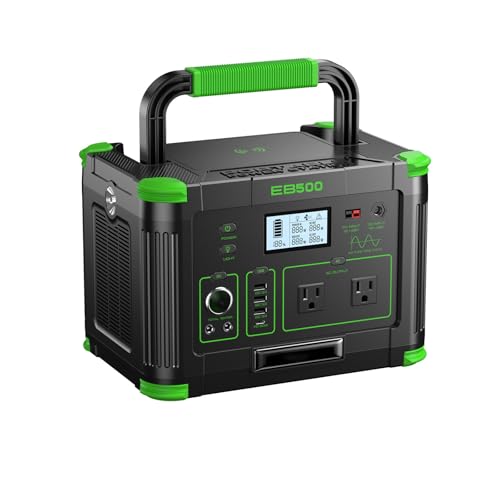
GRECELL 500W 519.48Wh Portable Power Station

EnginStar 150W 155Wh Portable Power Station

STARYLINE 1000W 1024Wh Portable Power Station

GENDOME StarGrid 288Wh Starlink Mini Power Kit

GENDOME StarGrid 288Wh Kit for Starlink Mini

DaranEner 89.6Wh 100W PD Power Station

STARYLINE 1000W 1024Wh LiFePO4 Power Station

Ecarke 350W DeWALT 20V Battery Inverter
Why These Options Stand Out
The StarGrid concept turns a spare battery into part of the Starlink Mini setup rather than another loose box in the trunk. Its integrated form provides a more stable connection for a campsite or RV stop where staying online matters. For people working remotely or navigating a remote area, that focused design can feel unusually tidy.
LiFePO4 denotes a lithium iron phosphate chemistry, which is commonly selected for a balance of usable capacity and cell longevity. The stated 288Wh reserve supports up to eight hours of Starlink Mini operation, although real runtime varies with usage. Compared with the GRECELL 500W station, this model prioritizes one essential device over broad household coverage.
Where It Excels
- The integrated stand reduces the need for a separate support.
- A carrying case keeps the battery and cables together during travel.
- Solar and vehicle charging suit camps with dependable recovery options.
- The dedicated form simplifies setup for Starlink Mini owners.
Practical Considerations
- The 288Wh reserve is better suited to connectivity and small electronics than appliances with high draw.
- Keep contacts and the battery housing dry during storage, particularly in humid weather.
Built With In Mind
This kit suits remote workers, RV travelers, and Starlink Mini owners who value a stable, compact connection setup.
A Better Fit Elsewhere
The GRECELL 500W 519.48Wh Portable Power Station serves campers who also need laptops, cameras, and several smaller devices simultaneously.
Capacity alone does not determine whether a camp power station works, so GRECELL pairs 519.48Wh with 500W of rated output and as much as 1,000W peak output. That combination gives small electronics breathing room without approaching the weight and bulk of a 1,024Wh unit. It looks most useful for weekend campers carrying several USB devices and a laptop.
The built-in BMS, or battery management system, monitors cell behavior and helps protect the pack from unsuitable charging or operating conditions. Ten ports reduce adapter clutter, a meaningful benefit around a crowded picnic table. Unlike the Starlink-focused GENDOME, this is a general-purpose station rather than a single-device system.
The Practical Payoff
- Ten outputs support phones, laptops, cameras, and other compact devices.
- 519.48Wh offers more reserve than the EnginStar without reaching 1KWh.
- 500W rated output handles more demanding electronics.
- The integrated BMS supports controlled charging and operation.
Trade Offs
- Its broader capacity makes it heavier than small power-bank models.
- Run time falls quickly with high-output devices, so planned budgeting matters.
- Solar charging is slow enough that a vehicle outlet may be more practical during arrival.
Made For
Weekend campers, mobile offices, and families charging several small electronics benefit most from its middle-sized capacity.
Consider Something Else When
The STARYLINE 1000W 1024Wh Portable Power Station is a stronger fit for mini refrigerators, kettles, and other higher-draw camp appliances.
At roughly four pounds, the EnginStar avoids turning portability into a large lifting problem. Its 4.5-by-6.5-by-7.5-inch enclosure suits a daypack or vehicle organizer, while 155Wh covers the smaller essentials rather than a whole campsite. Hikers and casual campers get a practical mix of AC and low-voltage outputs without carrying a large station.
Six outputs include a 110V AC outlet, two DC connections, and two USB ports, plus the stated LED light. That makes the unit more versatile than an ordinary power bank, even though its 150W ceiling limits larger appliances. Compared with the DaranEner 89.6Wh model, it offers more reserve but less USB-C-focused charging.
Points In Its Favor
- The compact enclosure makes packing less disruptive.
- AC and DC outputs cover common camping electronics.
- LED lighting adds a useful emergency accessory.
- Silent battery operation avoids fuel and combustion near the tent.
Some Limits To Know
- The 150W AC rating excludes most kettles and larger refrigerators.
- Capacity may feel limited during a long, device-heavy weekend.
- Charging contacts and air vents need occasional inspection after dusty trips.
The Right Fit
Light campers, hikers, and occasional travelers carrying phones, lights, and small laptops get the most benefit from this compact setup.
Another Choice May Suit
The DaranEner 89.6Wh 100W PD Power Station is easier for flight-focused campers who prioritize USB-C charging over AC capacity.
Power-hungry camps need output and usable energy together, and this STARYLINE model combines 1,000W continuous capability with a 1,024Wh reserve. That gives it more room for a mini refrigerator, electric kettle, router, and lighting than the GRECELL. In my view, it serves vehicle-based camping well, though the extra energy makes hand-carrying less convenient.
The source also identifies a three-day camping use case, but device mix changes consumption dramatically. A cooler cycling all day and a kettle heating briefly create very different demands. The same model can support home emergencies, making it useful beyond a weekend under trees.
Real Benefits
- 1,000W output supports higher-draw camp appliances.
- 1,024Wh reduces charging interruptions during extended trips.
- Three housing colors allow easier coordination with camp equipment.
- Large reserve suits a mix of household backup and travel devices.
Details To Watch
- The size and weight are less suitable for backpacking.
- Appliance startup surges can exceed a unit’s continuous rating.
- Battery and panel connections should remain dry during rain.
Whose Shelf It Belongs On
Vehicle campers, families, and households seeking one station for appliances and emergency electronics receive the greatest benefit.
Look Elsewhere When
The EnginStar 150W 155Wh Portable Power Station is more practical for a lightweight day camp that needs only small electronics.
This GENDOME package concentrates on a complete Starlink Mini setup, including the 288Wh battery, a fitted carrying case, a DC cable, and a DC-to-USB-C cable. That accessory bundle reduces the chance of leaving a required lead at home. I see it as a clean choice for campers who move between work sites, cabins, and remote campsites.
The custom-molded battery creates a stable, compact arrangement, while the listed 90,000mAh figure gives another view of the pack’s size. Up to eight hours of Starlink runtime is plausible for some workloads, but signal activity affects consumption. It handles connectivity more effectively than general camp loads.
Strong Points
- Included cables make the kit easier to assemble.
- A fitted case simplifies transport and storage.
- The stable molded form helps support Starlink Mini outdoors.
- LiFePO4 chemistry favors long-term pack ownership.
- The dedicated design keeps satellite power organized.
Possible Compromises
- Its narrow device focus leaves little capacity for other equipment.
- Separate weather protection may be needed in prolonged rain.
Who Will Love This
Satellite-dependent travelers, remote workers, and RV campers appreciate the focused battery, case, and connection leads.
A Sibling Pick Shines
The GRECELL 500W 519.48Wh Portable Power Station offers broader capacity for people whose camp needs extend beyond internet access.
The StarGrid 288Wh Kit removes the mental work of assembling a separate battery, support, and case for Starlink Mini. Its molded battery fits closely with the device, creating a compact arrangement that feels less temporary than a pack balanced on a picnic table. For dedicated satellite campers, that simplicity is the central benefit.
The kit includes a custom case, a DC lead, and a DC-to-USB-C cable, so the core connection components travel together. Compared with the 519.48Wh GRECELL, energy is limited, but the fit is much more purpose-driven. Starlink owners may also find the 288Wh reserve easier to manage during a day of intermittent connectivity.
Where It Delivers
- Custom fit creates a stable satellite setup.
- Included case protects and organizes the main components.
- Both DC connection leads are included.
- Compact handling suits travel between campsites.
Room For Improvement
- Capacity will not support a broad collection of appliances.
- Outdoor charging may require a compatible solar or vehicle arrangement.
- The case and molded joints should be checked for grit after rough travel.
Made For
Starlink Mini owners working from vehicles, cabins, or remote camps benefit from the integrated form and included leads.
Reach For A Different Pick When
The DaranEner 89.6Wh 100W PD Power Station is a better fit for travelers who charge USB-C laptops rather than operate satellite internet.
Travel restrictions shape modern camping gear, and the DaranEner measures 6.5 by 3.3 by 4.0 inches with a listed weight of 2.5 pounds. That footprint fits more readily into carry-on luggage than the EnginStar. I find it most convincing for flights, vehicle overflow storage, and camps where a full-size generator would be awkward.
Power Delivery, abbreviated PD here, is a fast-charging standard used to negotiate suitable power levels over USB connections. A 100W PD USB-C port can serve compatible laptops and phones, while the AC outlet reaches 100W continuously and 200W at peak. The 89.6Wh reserve is the catch: efficient devices gain more usefulness from it than demanding equipment.
Where It Helps
- Compact dimensions simplify air travel and packing.
- The 100W PD port supports efficient USB-C charging.
- A soft handle improves carrying between vehicles and camps.
- AC output expands beyond ordinary power-bank functions.
Factors To Consider
- Small capacity limits repeated full laptop charging.
- Peak output does not replace continuous output for sustained loads.
- Vent openings need care around dust and campsite debris.
Travel Ready
Flight travelers, light campers, and remote workers benefit from a small station centered on efficient USB-C devices.
Another Choice May Suit
The EnginStar 150W 155Wh Portable Power Station serves campers needing twice the stated capacity and a more established AC connection.
This second STARYLINE option combines the same 1,000W output and 1,024Wh capacity with LiFePO4 chemistry. That battery type is often valued for cycle life, making it a sensible ownership choice for frequent campers who also keep the unit ready during outages. The result is a dependable middle ground between small power banks and permanently installed systems.
Two AC outlets, a 60W PD USB-C port, and two USB-A ports support a mixed equipment load. Lights, a router, and a mini refrigerator form a more practical camp network than any one device alone. Compared with the standard STARYLINE model, the chemistry is the defining difference, but the available charging methods also matter.
Notable Upsides
- LiFePO4 cells favor repeated charge and discharge cycles.
- 1,024Wh provides a substantial camp reserve.
- 1,000W output supports appliances and networking gear.
- Five listed ports can serve several device families.
- 60W USB-C PD reduces adapter dependence.
Less-Strong Areas
- The 1KWh class unit is too substantial for casual backpacking.
- High-draw appliances shorten total available runtime.
- Long storage in damp conditions calls for periodic charge checks and dry storage.
Built With In Mind
Frequent campers, families, and households preparing for outages benefit from its LiFePO4 capacity and mixed output.
Swap It Out When
The GRECELL 500W 519.48Wh Portable Power Station is more manageable for weekend trips centered on USB electronics.
The Ecarke takes a different route from every self-contained station here: it borrows power from a compatible DeWALT 20V battery. That makes sense for tradespeople who already carry that battery for drills and other tools. At 1.35 pounds, the converter can move from a job site to a campsite without becoming a separate battery-carrying system.
The inverter changes a compatible battery’s 18-to-20-volt DC output into 110-to-120-volt AC power, up to 350W. Laptops, phones, fans, and compact projectors fall within that range, but camping appliances can demand more. The tool-only package excludes both battery and charger, so ownership starts only after that hardware is already part of the equipment mix.
What Stands Out
- Reuses a battery already common in DeWALT tool collections.
- The 1.35-pound body fits readily in a tool bag.
- 350W output covers several portable electronic devices.
- Avoids carrying a second dedicated campsite battery.
Less-Suited Details
- Neither the DeWALT battery nor a charger is included.
- Compatibility excludes people without that battery platform.
- Runtime depends on the battery’s capacity, charge level, and connected device.
- Adapter sockets need occasional cleaning in dusty work environments.
Built With In Mind
Tradespeople, contractors, and serious campers already carrying DeWALT 20V equipment receive the strongest benefit.
Another Choice May Suit
The EnginStar 150W 155Wh Portable Power Station is the cleaner choice for campers who need a self-contained battery and AC power.
What To Prioritize Before Camp
Start with energy for the trip. Wh measures stored energy, while watts describe instantaneous output; a station can hold plenty of charge but still lack the output needed by a kettle. I compare both numbers against the device list, then estimate realistic hours rather than relying on isolated charging counts.
Portability comes next, especially for camps reached by foot. Weight and dimensions decide whether a unit remains easy to carry or becomes dead cargo in a vehicle. The DaranEner and EnginStar suit lighter trips, while the 1,024Wh STARYLINE models prioritize fewer charging stops over easy hauling.
Charging routes matter too. USB-C PD supports compatible fast charging, AC outlets serve conventional adapters, and vehicle or solar input extends options away from a campsite. I inspect included cables and connection types before packing because a capable station still depends on the right lead.
Battery chemistry is another practical filter. LiFePO4 is commonly chosen for cycle longevity, but capacity, output, and weight still decide usefulness. I balance chemistry against price, portability, and device requirements rather than treating it as the only feature that matters.
Power Details That Change The Decision
Mistakes Worth Dodging
A large wattage number does not guarantee long runtime for high-draw equipment. I check each device’s power requirements, startup behavior, and likely daily use before choosing capacity. I also confirm connector types, since a missing cable can limit an otherwise capable station.
What Separates LiFePO4 From Basic
LiFePO4 packs generally prioritize repeated cycles over maximum weight savings. The premium comes from more useful service life and less concern about daily charge cycles, but the upgrade may not pay off for occasional trips. I favor it for frequent camping, home outages, and long-term ownership plans.
