

A tent can turn into a sauna quickly once the afternoon heat settles in, especially with canvas walls, limited ventilation, and no nearby outlet. Battery operated fans for camping give campers a portable way to move air, keep a light on after dark, or create a more comfortable space beside a tent, RV, picnic table, or campsite.
The right choice depends on how much runtime matters, how the fan is positioned, and how much space I have in my pack. Solar charging, Type-C recharging, clip-on placement, and handheld portability each solve a different problem, so I looked at the details behind battery capacity, speed controls, lighting, and outdoor construction. I also considered the practical limits of each design, including charging access, wind coverage, and the difference between cooling a personal area and cooling an entire tent.
A Snapshot Of The Selections

JXTKD Solar Camping Fan 10000mAh Tent Fan

Aecooly Mighty Portable Handheld Fan

JISULIFE Handheld Fan 4000mAh

JXTKD Solar Camping Fan Orange
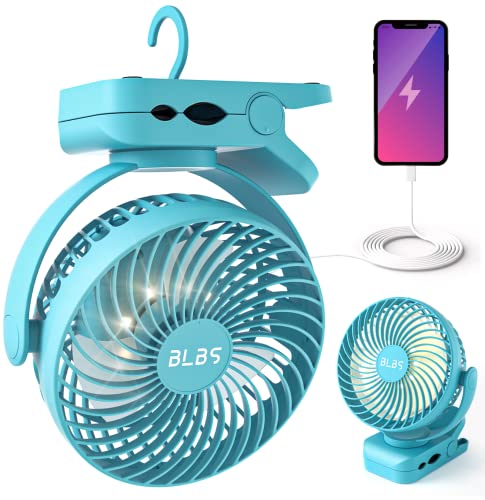
BLBS Clip on Camping Fan 12000mAh

Gaiatop Handheld Fan with LED Mirror

JXTKD 3-Speed Solar Tent Fan

JXTKD Solar Tent Fan Green and Black

JXTKD Solar Camping Fan Orange and Black
What Each Pick Brings To The Table
This is the more complete campsite option in the group, with a 10,000mAh battery, solar input, Type-C charging, four airflow settings, and an integrated light. I like it for a tent that needs both daytime circulation and a basic lamp after sunset, although its size will take more room than a handheld model.
The listed runtime reaches 13 hours on low and four hours on high, with about 3.4 hours for fan and light together. That spread makes sense for evenings around camp, but campers who need strong airflow through the night may prefer the BLBS model with its larger battery and clip-on flexibility.
Strong Points
- Solar and Type-C charging provide useful flexibility away from an outlet.
- Four speed settings make it easier to balance airflow against battery use.
- The built-in LED removes the need for a separate small lantern.
- Large battery capacity suits regular overnight camping use.
Trade Offs
- Fan and light use together reduces runtime considerably.
- Owners may need to keep the solar panel exposed in strong daylight, while shaded or heavily overcast conditions can limit replenishment.
Key Specs
Made For
This suits campers who want one device for tent airflow, charging flexibility, and basic nighttime lighting.
A Better Fit Elsewhere
JISULIFE Handheld Fan 4000mAh is easier to carry for personal cooling, while BLBS Clip on Camping Fan 12000mAh offers longer clip-on use.
The Aecooly Mighty is built for personal airflow rather than whole-tent ventilation. Its maximum wind speed is listed at 20 feet per second, and the digital screen shows battery level and current speed, which helps during a commute, outdoor workout, or long walk in warm weather. That makes it more targeted than the JXTKD tent fan.
Three flexible modes offer a better choice for quick relief or steadier airflow. The honest read is that its value depends on accepting a handheld format: it cools the person holding it, while a clip-on or tabletop model can continue working without a hand on it.
Everyday Advantages
- The 20-foot-per-second maximum supports stronger personal airflow than a gentle desk fan.
- The display gives quick access to remaining battery and speed information.
- Three modes make it easy to adjust between quiet use and active cooling.
Worth Noting
- It does not provide the same hands-free placement as a tent fan or clip-on model.
- Carrying it through a full day of walking may create more hand fatigue than expected, especially at the highest setting.
Who It Suits Best
This fits commuters, day hikers, and travelers who want direct airflow while moving between camp and outdoor activities.
Where Another Pick Shines
Gaiatop Handheld Fan with LED Mirror is the more compact carry option, while JXTKD 3-Speed Solar Tent Fan is better for unattended airflow.
The JISULIFE model is the straightforward pocket fan in this group, with a 4,000mAh rechargeable battery, Type-C charging, and a stated runtime of up to 16 hours on the lowest speed. Its three speeds let me dial down the output for a desk or campsite evening, then increase it for a warm walk or a queue in the sun.
At 3.35 by 1.59 by 6.46 inches and 175 grams, it is easier to pack than a tent fan. Four wide blades and a listed motor speed of up to 4,400 RPM add useful airflow, but this remains a personal device, not a substitute for a tent fan placed at the entrance.
Notable Upsides
- Up to 16 hours on low makes it convenient for short camping trips and long travel days.
- The lightweight body fits in a small daypack without taking much room.
- Type-C charging simplifies recharging from compatible power banks and adapters.
- The lanyard hole and stable desktop placement support different uses.
Small Caveats
- Runtime falls to four hours at the highest speed, so high output is better for shorter bursts.
- It has no integrated lamp, unlike the JXTKD and BLBS options, and its compact body may feel less substantial during heavy handling.
Quick Facts
The Right Fit
It fits travelers who value low weight, simple controls, and a fan that can move from a bag to a campsite table.
Reach For A Different Pick When
JXTKD Solar Camping Fan 10000mAh Tent Fan is the better choice for a shared tent area and a built-in light.
The orange JXTKD version uses the same broad 10,000mAh, solar, Type-C, four-speed approach as the first JXTKD model, but its color makes it easier to spot among dark camping gear. I see it as a sensible choice for a tent entrance, picnic table, or RV sleeping area where color visibility is useful.
The listed low-speed runtime is 13 hours, falling to four hours at high speed and 3.4 hours with the light running. That is plenty for a quiet evening, though the solar panel is best treated as a supplemental charging source rather than the only power plan when the sky is overcast.
What It Does Well
- Bright color helps locate the fan around a campsite or inside an RV.
- Four speeds support quieter evening use and stronger daytime airflow.
- Solar and Type-C inputs offer more than one way to recharge.
- The integrated light keeps a tent entrance usable after sunset.
Details To Watch
- Using the LED with the fan reduces the listed battery life, so nighttime use needs planning.
- The design does not clip or hang, so placement depends on finding a stable surface.
Who Should Grab It
This suits campers who want a visible tabletop fan and light with simple dual charging for campsites and RV trips.
A Better Fit Elsewhere
BLBS Clip on Camping Fan 12000mAh gives more placement freedom, while JISULIFE Handheld Fan 4000mAh is easier to carry.
The BLBS fan stands apart through its clip-on format and 12,000mAh battery, with runtime stated from 12 to 65 hours depending on speed. That range makes it useful for a tent, golf cart, stroller, or a table where a handheld fan cannot remain in place. I prefer this design when the fan must work independently.
Two LED brightness settings add a practical light, and the listed 2A charging setup reaches a full charge in about 4.5 hours. The trade-off is that battery capacity alone does not guarantee strong airflow in every setting, so speed and airflow size matter as much as the headline runtime.
Useful Strengths
- Clip-on placement keeps airflow active without a hand-held device.
- The 12,000mAh battery is among the larger capacities in this group.
- Two light brightness settings support both quick visibility and softer ambient lighting.
- The stated 12-to-65-hour range suits long evenings around camp.
Trade-Offs To Consider
- The clip must be attached to a compatible edge, and a narrow tent seam may not hold it securely.
- Long runtime figures generally depend on lower settings, so stronger airflow reduces operating time.
At A Glance
Best Suited To
It fits campers who need a hands-free fan for a tent, golf cart, stroller, or other stable camping setup.
Another Choice May Suit
Aecooly Mighty Portable Handheld Fan is better for direct airflow while walking, whereas BLBS handles stationary use more neatly.
Gaiatop takes a different approach from the camping-focused models by combining a compact handheld fan with an LED makeup mirror. That combination makes it more relevant to travel days, hotel rooms, and campsite evenings where a quick personal light is useful. The source data confirms a lightweight 0.21-pound body, while the listed speed choices and fast charging support repeated use.
The mirror is a distinctive addition, but it does not change the fan’s basic limitation: cooling stays personal. Compared with the BLBS clip-on fan, this is easier to slip into a small carry-on or day bag, yet less useful for circulating air around a tent.
What Pays Off
- The 0.21-pound body is easy to carry for travel and light packing.
- The LED mirror adds a practical task light without a separate accessory.
- Multiple speed choices suit different levels of personal cooling.
Points To Note
- It is primarily a personal fan, so it cannot match a tabletop or clip-on model for unattended tent airflow.
- The mirror may add more bulk than a plain handheld fan, and the source data does not specify a camping light output.
Made For
This fits travelers who want lightweight personal cooling with a built-in mirror for hotel stays, flights, and campsite mornings.
Look Elsewhere When
Choose JXTKD 3-Speed Solar Tent Fan when hanging or tabletop placement matters more than personal grooming light.
The 3-speed JXTKD model focuses on placement. Its foldable stand adjusts through 180 degrees, and the rear hook can hang the fan from a tent pole or branch, which gives it more flexibility than the tabletop-only JXTKD versions. I find that especially useful when a stable surface is scarce inside a small tent.
The listed battery is 10,000mAh, with Type-C charging and a 5W solar panel. Runtime is stated at up to five to ten hours on a full charge, and ideal sunny conditions may allow a solar recharge in five to eight hours. The housing is described as rugged, with resistance to minor splashes, dust, and bumps rather than unrestricted exposure.
Where It Excels
- The foldable stand supports tabletop placement at several angles.
- The hanging hook allows airflow near a tent pole without using floor space.
- Three speeds give a simpler control layout than the four-speed variants.
- Solar and Type-C charging suit both campsite and conventional power.
Areas To Watch
- The listed five-to-ten-hour runtime is shorter than the BLBS model’s maximum range.
- Solar charging depends heavily on direct sunlight, and the housing is meant for minor outdoor exposure rather than soaking conditions.
The Right Fit
It fits campers who need flexible tabletop or hanging placement in a tent with limited stable surfaces.
Swap It Out When
BLBS Clip on Camping Fan 12000mAh is the better fit for long stationary use, while JXTKD 4-Speed models provide more speed control.
The green-and-black JXTKD version follows the same four-speed, 10,000mAh platform as the other full-size models. It suits a camper who wants a single fan for an RV, tent, roadside stop, or emergency kit, with solar and Type-C charging covering two common ways to replenish the battery. The two-tone finish may also be easier to distinguish from ordinary camp gear.
Its low-speed runtime is listed at 13 hours, compared with four hours at high speed and 3.4 hours with the LED active. That makes speed selection part of the ownership decision: higher settings may be useful for daytime ventilation, while lower settings are more sensible for an overnight tent.
Key Advantages
- Four speeds cover a wider range of airflow and battery trade-offs.
- Dual charging supports campsite use and access to a Type-C power source.
- The LED light adds basic visibility after daylight fades.
- The 10,000mAh battery balances capacity with a portable camping format.
Less-Strong Areas
- It appears designed for tabletop placement, so the hanging flexibility of the 3-speed model is absent.
- Solar input is a supplement rather than a dependable replacement for a full charge in poor weather.
Built With In Mind
It suits campers who want flexible speed control and integrated lighting for a tent, RV, or emergency bag.
Consider Something Else When
JXTKD 3-Speed Solar Tent Fan is better when hanging from a tent pole matters, and BLBS offers longer stated runtime.
The orange-and-black JXTKD model is a regular-use option for a tent, RV, or roadside setup. It combines a 10,000mAh battery, solar charging, Type-C charging, four speed settings, and an LED light in one body. That combination reduces the number of small devices I need to carry, especially on trips where campsite lighting and airflow are both useful.
The stated runtimes are 13 hours on low, four hours on high, and 3.4 hours with the light operating. I would treat the fan and lamp as competing uses, because leaving both on at once changes the expected runtime substantially. Compared with the green-and-black version, the functional design is similar, so color and listing preference are the meaningful differences.
Why It Works Well
- Four speeds support quiet evenings and more active daytime airflow.
- Solar and Type-C charging give multiple options for replenishing power.
- Integrated lighting keeps a tent entrance or RV area visible after dark.
- The 10,000mAh battery supports extended use at lower settings.
Practical Considerations
- Using the LED at the same time as the fan sharply reduces the listed runtime.
- The fan needs a stable surface, and the solar panel requires suitable light for meaningful supplemental charging.
Feature Snapshot
Right Fit For
This suits regular campers who want one portable device for airflow, campsite lighting, and flexible recharging.
Skip It When
Choose BLBS Clip on Camping Fan 12000mAh for longer stationary use, or JISULIFE for a lighter personal carry option.
What To Prioritize Before Choosing A Camping Fan
Runtime And Charging Style
Battery capacity gives a rough indication of endurance, but speed and lighting change the result. A 10,000mAh model may last longer on low than on high, while a 12,000mAh clip-on fan can extend stationary use further. Type-C charging is useful around camp, while solar input adds flexibility but depends on sunlight and panel placement.
Placement And Airflow Coverage
A handheld fan cools the person holding it. A clip-on or hanging model can keep working near a tent pole, golf cart, stroller, or RV wall, while a tabletop model is better for a table or entrance area. I also consider whether the fan is meant to move a narrow personal stream of air or provide broader tent circulation.
Lighting And Outdoor Details
An integrated LED removes one small item from a campsite kit, but using it with the fan reduces runtime. Foldable stands, hooks, and clips determine whether the device can stay in position. Rugged housing and minor splash resistance help with ordinary campsite handling, though none of these details should be mistaken for unlimited weather protection.
What The Higher Tier Buys
Common Shopping Slip Ups
A large battery number can hide a weak airflow plan, so I check the listed runtime by speed. A solar panel is useful, but it should complement rather than replace a dependable full charge. I also notice whether a fan has a stand, hook, or clip, because placement often matters more than another small feature.
What The Higher Tier Buys
Higher-capacity models often add larger batteries, stronger charging, or more flexible placement. That matters for multi-day trips, RV travel, and camps where a fan runs unattended. For a single afternoon at a nearby campsite, a lighter personal fan may be the more sensible ownership choice.
Frequently Asked Questions
How long do battery operated fans for camping usually run?
Runtime depends on battery capacity, speed, and lighting. The JXTKD models are listed at up to 13 hours on low, while the BLBS model is listed from 12 to 65 hours by speed.
Are solar camping fans practical?
They are practical when the solar panel receives suitable sunlight and the battery is charged before the trip. Type-C charging remains useful for cloudy weather and faster topping up.
Can a handheld fan cool a whole tent?
Not effectively. Handheld models provide personal airflow, while clip-on, hanging, and tabletop models are better for moving air around a tent or RV area.
Which camping fan works best at night?
A model with an integrated LED offers convenient visibility without a separate lantern. Running the fan and light together can reduce available runtime, so speed and battery planning matter.
Final Verdict
For most campsites, the JXTKD four-speed models offer the most balanced combination of airflow, charging options, and lighting. The BLBS option is my practical choice for long stationary use, while JISULIFE and Aecooly are easier to carry. Choose based on placement first, then let battery capacity and speed controls settle the decision.
