

Basic camping equipment should handle more than an afternoon at the campsite. I favor a compact setup that can serve an overnight trip, a roadside breakdown, or an unexpected night outdoors without turning the trunk into a hardware store. My selections cover sleep, shelter, food preparation, power, maintenance, and emergency preparation, with special attention to pack weight, capacity, and practical ownership.
A Fast Comparison Of The Options

LIMA-TANGO Survival THE Solo 48-Hour Kit

LIMA-TANGO Survival THE Alpha 72-Hour Kit

Amazon Basics Garden Rake Adjustable Steel Handle

Mutaomay 5000-Watt Inverter Generator

HI NINGER 9-in-1 Collapsible Cutting Board

HI NINGER Collapsible Cutting Board with Colander
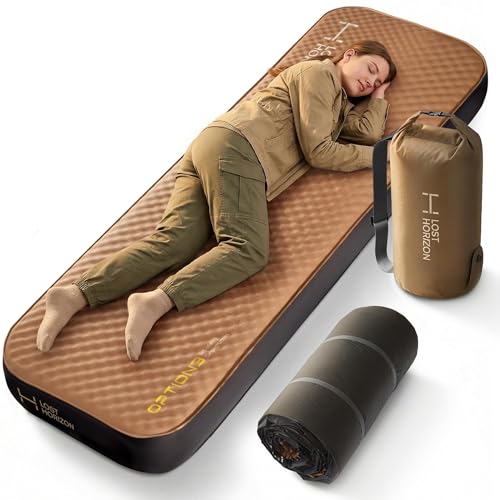
Lost Horizon Option3 Self-Inflating Foam Mattress 4.5 Inch

Lost Horizon Option3 Slim Single Foam Mattress 3 Inch

PSKOOK Bow Drill Kit Fire Starter
The Details Behind The Selections
The Solo concentrates a wide emergency inventory into one 45-liter pack, which makes more sense for a commuter or solo hiker than assembling individual items by category. Its stated 48-hour planning period gives the contents more context than a loose collection of camp tools.
I see it as a prepared vehicle kit rather than a substitute for normal camping equipment. The organized assortment should suit one adult better than the two-person Alpha, although the dense packing may be substantial for a day hike.
What Earns Its Place
- Covers shelter, water, food, lighting, first aid, and tools in one pack.
- Includes a shovel, wire saw, compass, fishing set, multitool, and ten feet of duct tape.
- The 45-liter backpack supports organized vehicle or home preparedness.
Small Caveats
- Two people would need to divide the same limited contents carefully.
- Food, filters, and medical supplies require regular inventory checks and replacement planning.
Key Attributes
Who It Suits Best
Solo campers, commuters, and homeowners preparing a portable 48-hour response kit benefit most from the focused assortment.
A Better Fit Elsewhere
Two-person households gain more usable capacity from LIMA-TANGO Survival THE Alpha 72-Hour Kit.
The Alpha expands the Solo concept for two adults and a longer 72-hour planning window, using the same 45-liter pack size. That makes allocation more demanding despite the larger 291-piece inventory, particularly during a vehicle evacuation.
Compared with the Solo, this kit places greater emphasis on shared supplies and a more developed first-aid assortment. It looks sensible for couples preparing at home or in a car, though I would expect the packed weight to demand a lifting check before loading.
Advantages To Know
- Builds first-aid provisions around common field-care tasks.
- Includes both 100 feet of paracord and ten feet of duct tape for field repairs.
- Multiple cutting and clearing tools reduce reliance on one improvised method.
- Shelter, water filtration, food, lighting, and hygiene supplies support 72-hour planning.
Trade Offs
- The 45-liter envelope must carry more equipment than the Solo.
- Regular checks are important for perishables, filter status, and battery-dependent lighting.
Built With In Mind
Couples, families, and car-camping households gain the most sensible division of emergency supplies here.
Another Choice May Suit
Lightweight solo travelers may prefer LIMA-TANGO Survival THE Solo 48-Hour Kit to manage a smaller inventory.
A rake rarely belongs in a standard overnight pack, but it becomes useful at long-stay sites, woodland cabins, and homes with a neglected yard nearby. The adjustable steel shaft makes this one relevant to shared campground maintenance rather than core sleep or cooking gear.
The 8-inch head reaches beneath shrubs and into delicate planting areas without the reach of a full-size leaf rake. For my purposes, the adjustable length matters more at the campsite because it allows the tool to collapse for storage between chores.
Everyday Wins
- The narrow head clears leaves around shrubs and confined garden areas.
- A 38.58-inch minimum length suits shorter users and reduces stooping.
- Collapsing the handle simplifies storage in a vehicle, shed, or cabin.
Worth Noting
- It complements campsite cleanup but does not replace a full-size rake for broad lawns.
- Owners should dry the steel head and handle after wet use to limit surface corrosion.
Quick Facts
The Right Fit
Long-stay campers and cabin maintainers get the most value from this compact yard tool.
Reach For A Different Pick When
Minimalists who need only overnight essentials can leave this rake behind and favor the PSKOOK Bow Drill Kit Fire Starter.
The Mutaomay fills the largest power gap in this roundup, supplying 4,000 running watts for an RV, outdoor work area, or household outage. Inverter technology refers to power conversion that produces a steadier output, which fits laptops, phones, and other sensitive electronics better than a basic non-inverter approach.
I would treat 5,000 peak watts as a starting allowance rather than a promise of capacity for every possible load. Fuel planning, operating duration, outlets, and the device draw still require verification before an extended trip.
Noteworthy Benefits
- Provides 4,000 watts continuously for sustained appliances and tools.
- Inverter output suits sensitive electronic equipment.
- The 5,000-watt peak capacity offers headroom for compatible starting loads.
Practical Considerations
- Its bulk and operating noise make it less suitable for quiet campsites.
- Fuel systems require maintenance, and long storage calls for attention to fuel condition.
- Capacity still depends on the combined draw of connected equipment.
Technical Highlights
Made For
RV travelers, outdoor workers, and households needing substantial outage support fit this power level.
A Sibling Pick Shines
Campers traveling without heavy electrical needs gain a quieter, simpler setup from Lost Horizon Option3 Slim Single Foam Mattress 3 Inch.
A busy camp kitchen benefits from combining a work surface, washing basket, and storage areas in one item. This HI NINGER board uses a collapsible design, so it can handle chopped ingredients and then occupy less drawer space at home between trips.
The supplied attributes identify polypropylene for the board, thermoplastic rubber for the basket, and stainless steel for the cutter. That mixed construction suits campers concerned about odor, cracking, or deformation, while the cutting tool still needs careful washing and dry storage.
Real Benefits
- Collapses to reduce cabinet and storage-bench space.
- Combines food preparation, draining, and organization in a compact station.
- The basket and board are made from materials selected for easier cleaning.
Room For Improvement
- Multiple joints and removable parts require thorough rinsing after use.
- The broad nine-function design may take practice to learn efficiently.
Right Fit For
RV travelers and family campers with limited kitchen space benefit from the combined workflow.
Not My Match When
Minimalist campers carrying a separate knife and colander can leave both HI NINGER models behind.
The second HI NINGER model is difficult to separate on specifications because the available data describes the same polypropylene board, thermoplastic-rubber basket, stainless cutter, and nine-part approach. I interpret the distinct listing mainly as a different option for shoppers comparing available variants, not as a different level of materials.
Its foldable construction remains useful in a small tent, where a rigid board takes valuable floor space. Compared with the first HI NINGER model, the supported difference is naming and presentation rather than documented construction.
Practical Advantages
- Folds down for easier storage in compact camp kitchens.
- The colander supports rinsing and draining after chopping.
- Separate cutting and washing areas reduce the need for several accessories.
Less Ideal Details
- Nearly identical source details make a feature-based distinction difficult.
- Retractable sections can trap residue, so each joint needs a proper cleaning routine.
Who Should Grab It
Small-space campers and couples prioritizing storage efficiency make good use of this layout.
Another Choice May Suit
Campers needing a wider sleep surface should favor Lost Horizon Option3 Self-Inflating Foam Mattress 4.5 Inch instead.
Sleep equipment has a direct effect on whether the rest of a camping kit feels manageable, and the 4.5-inch Option3 favors a padded car-camping setup. Its self-inflating design combines internal foam with air, reducing the need to carry a separate inflatable pad.
The stated five-and-a-half-pound filling and 220-pound capacity put it closer to a portable mattress than a thin air pad. I would still expect the bulk to matter for backpack travel, especially on a long route where every pound carries a cost.
Features That Help
- The 4.5-inch thickness creates a more substantial sleeping surface.
- Internal foam provides support without requiring a separate foam pad.
- A listed capacity of up to 220 pounds accommodates a broad sleep-size range.
Things To Weigh
- The mattress adds more volume than the three-inch Slim Single.
- Owners should keep the foam dry and inspect valves before long storage periods.
Core Details
Whose Shelf It Belongs On
Car campers, couples, and families prioritizing sleeping comfort benefit from the extra thickness.
Consider Something Else When
Solo travelers in narrow tents gain easier handling from Lost Horizon Option3 Slim Single Foam Mattress 3 Inch.
The Slim Single answers a different sleeping problem from the 4.5-inch Option3: fitting one camper into a narrow vehicle or small tent. Its stated 62-by-26-inch footprint leaves more space along the sides of a confined sleeping area, while the three-inch profile keeps bulk in check.
For solo road trips, that trade-off feels sensible. Side sleepers may find the narrower width less accommodating, so measuring the available floor area before departure is the sensible ownership habit.
The Upside
- The 26-inch width suits narrow vehicle interiors and small tents.
- Three inches of thickness reduce pack volume relative to the 4.5-inch mattress.
- Self-inflating foam avoids carrying both a pad and a separate mattress.
Where It May Fall Short
- The single width leaves less room for restless sleepers or shared use.
- Foam mattresses need dry storage and routine valve checks.
Best Suited To
Solo road travelers, van campers, and tent campers with limited floor space receive the clearest benefit.
Skip It When
Campers seeking broader support and greater cushioning should use Lost Horizon Option3 Self-Inflating Foam Mattress 4.5 Inch.
The PSKOOK kit turns fire starting into a learned skill rather than a button press. A bow drill uses a cord-wrapped spindle, a fire board, and sustained friction to produce heat, making it especially useful for scout activities, outdoor instruction, and practiced primitive methods.
Bamboo forms the stated bow and handle construction, offering a smooth surface for repeated practice. I would carry it alongside a dependable lighter because humidity, tinder selection, and technique can change how quickly friction catches.
Why It Works Well
- Builds familiarity with the steps behind friction-based fire starting.
- Smooth bamboo components support repeatable handling during instruction.
- The compact kit suits scout activities and supervised outdoor practice.
Details To Watch
- Friction fire depends on dry tinder, suitable wood, and consistent technique.
- The fire board and cord wear during practice and need regular inspection.
Quick Technical Notes
Who Will Love This
Scouts, outdoor educators, and campers learning primitive skills enjoy the hands-on format.
Look Elsewhere When
Solo campers focused on straightforward emergency readiness may prefer LIMA-TANGO Survival THE Solo 48-Hour Kit.
What Matters Before Packing
Capacity comes before novelty for me. A 45-liter emergency backpack sounds compact until food, water treatment, shelter, medical supplies, and tools compete for room. I check the intended occupants first, then divide weight by task and accessibility.
Sleep support should match the sleeping location. A thick mattress suits a roomy vehicle, while a narrow three-inch profile makes more sense inside a small tent. Self-inflating foam reduces the number of separate sleeping items, but bulk still matters during solo travel.
Camp cooking equipment benefits from dual-purpose construction. A collapsible board with a built-in basket can replace several accessories, while complex joints need more attention during cleaning. I favor multifunctional gear only when the combined workflow remains simple.
Power equipment deserves the most conservative planning. Running watts, peak watts, inverter type, fuel availability, and device draw all affect fit. I also consider campsite rules, operating duration, and storage space before adding a generator to the pack.
Common Mistakes And Better Choices
Mistakes Worth Dodging
A large item count can create false confidence in an emergency kit. I check whether essential supplies match the number of occupants and remain accessible. I also verify perishables, filters, batteries, and tool condition before every trip.
What The Higher Tier Buys
A larger pack or thicker mattress costs more through added material, capacity, or support. The increase matters for two-person kits, car campers, and heavier electrical loads, but it adds weight for minimal overnight trips. Paying more feels sensible only when the extra capacity removes a real constraint.
Frequently Asked Questions
What basic camping equipment should every camper carry?
A practical kit includes shelter, sleep support, water treatment, food storage, lighting, navigation, first-aid supplies, and tools suited to the outing. Emergency preparedness gear adds useful depth but should not replace routine trip planning.
Is a self-inflating mattress easier than an air pad?
It requires less separate equipment because internal foam provides support. The trade-off is greater bulk, and added airflow can improve firmness during use.
How much camping power do I need?
I compare each device’s running draw with the generator’s continuous output, then leave some capacity for compatible starting loads. Fuel duration and campsite restrictions also shape the decision.
Are collapsible cutting boards durable?
The documented materials support regular camp use, but removable sections and joints need careful cleaning. Drying every component thoroughly helps limit residue and odor.
Should solo campers use a one-person survival kit?
A one-person kit can suit a single traveler, but contents still require regular checks. Couples benefit from a larger inventory rather than dividing limited supplies.
Final Verdict
I favor the Solo and Alpha kits for organized emergency planning, the two Lost Horizon mattresses for different sleeping spaces, and the HI NINGER boards for compact meal preparation. The Mutaomay generator suits substantial electrical demand, while the Amazon Basics rake and PSKOOK drill serve narrower campsite tasks. Matching each item to the actual trip produces a more coherent setup than carrying every useful tool at once.
