

Finding room for two adults usually means balancing width, packed weight, thickness, and the ground beneath a campsite. I focus on double-size foam beds, wide folding cots, and air pads that can turn a basic tent into a more comfortable two-person setup, with special attention to storage and real-world space constraints.
A Fast Comparison Of The Options

Lost Horizon Option3 Queen Foam Mattress

UXALoH6 80 cm Green Folding Camping Cot

GAIALOOP 4 Inch Memory Foam Camping Mattress

Lost Horizon Option3 Twin Foam Mattress

GAIALOOP 3 Inch Dual-Layer Camping Mattress
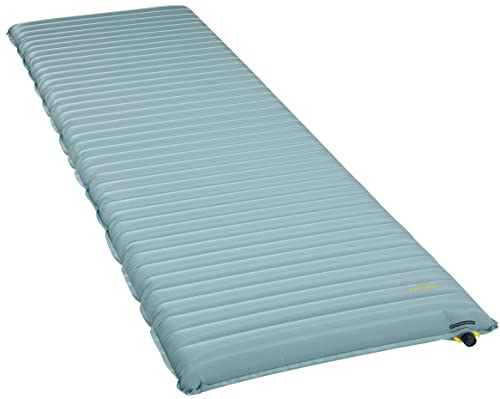
Therm-a-Rest XTherm NXT MAX Large Pad

Lost Horizon Option3 Full Foam Mattress

GAIALOOP Memory Foam Glamping Roll-Up Futon
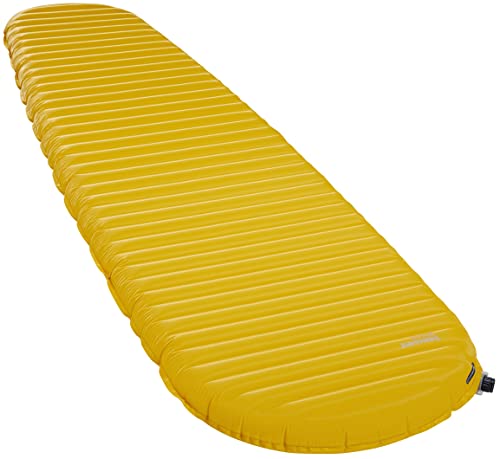
Therm-a-Rest Xlite NXT Sleeping Pad
Inside Each Recommended Option
The queen format makes this the most spatially generous foam option here, particularly for a roomy tent, cabin, or indoor guest setup. Its 4.5-inch profile and 13-pound foam core favor comfort over the lowest packed weight, so I see it serving couples better than solo hikers.
Unlike the compact Lost Horizon Option3 Twin Foam Mattress, this version provides substantially more sleeping room while retaining self-inflating convenience. The listed 440-pound capacity also makes it more relevant to couples with a combined body weight near the upper end.
Where It Excels
- The queen width gives each sleeper more elbow and shoulder room.
- A 4.5-inch profile adds useful separation from hard ground.
- Self-inflation reduces setup steps after opening the package.
- The 440-pound listed capacity suits a broad range of adults.
Practical Considerations
- The 13-pound foam core is substantial for a hiking kit.
- Open foam mattresses need clean, dry storage to prevent odors and moisture damage.
Feature Snapshot
Who It Suits Best
This mattress fits couples who value shoulder room and ground cushioning more than carrying a minimal load.
A Better Fit Elsewhere
Hikers carrying sleep systems over long distances may prefer the lighter Therm-a-Rest Xlite NXT Sleeping Pad.
This is the only conventional folding cot in the group, and its listed 80-centimeter width makes it more relevant to solo campers, light couples, or one adult plus a child. The aluminum shock-cord frame packs down to 18 by 65 centimeters, which is easier to fit into a vehicle or larger backpack than the thick foam mattresses.
Compared with the broad Lost Horizon Option3 Queen Foam Mattress, the UXALoH6 design trades mattress-like cushioning for an elevated platform and lower packed weight. That arrangement works well for campsite comfort, though two adults may feel crowded on a narrow cot.
Key Advantages
- The folding frame stores neatly in a vehicle or larger pack.
- An elevated surface reduces direct contact with bare ground.
- Shock-corded aluminum components simplify assembly and takedown.
- The 80-centimeter format gives solo campers a practical sleep surface.
Small Caveats
- The narrow format is less comfortable for two full-size adults.
- Owners commonly need to check frame joints and fabric tension during setup.
- At about 3.5 kilograms, it is compact but not especially light for backpacking.
Made For
This cot suits solo campers, parent-child camps, and road campers who value a raised sleeping surface.
Another Choice May Suit
Two adults seeking dedicated shoulder room will find the Lost Horizon Option3 Full Foam Mattress more appropriate.
Side sleepers get a strong reason to consider this model because its 4-inch profile and memory-foam layer can soften contact around the shoulder and hip. It is designed to accommodate two adults, making it more purpose-built for shared sleeping than many narrow air pads here.
Compared with the 3-inch GAIALOOP 3 Inch Dual-Layer Camping Mattress, this option adds meaningful thickness but gives up some packing economy. For a campsite, spare vehicle, or indoor guest surface, that seems like a sensible exchange.
Reasons It Performs
- Four-inch thickness provides deeper contouring than most three-inch pads.
- The memory-foam layer favors side sleepers and sensitive shoulders.
- Its stated two-adult focus supports shared sleeping arrangements.
- Rollable foam construction avoids inflation during nightly setup.
- The same surface can serve as a temporary guest bed.
Trade Offs
- Foam is bulkier and heavier than an inflatable air pad.
- Memory foam may retain heat in warm weather.
- Owners should air and fully dry the pad after use to reduce trapped moisture.
Technical Sheet
Who Will Love This
Couples and side sleepers benefit most from this model, especially in car-camping or indoor setups.
Reach For A Different Pick
Backpackers focused on low packed weight may prefer the Therm-a-Rest XTherm NXT MAX Large Pad.
The twin size makes this Lost Horizon model a practical solo pad, with enough surface area for a solo camper or one adult in a shared tent. Its 4.5-inch thickness preserves the cushioning level of the queen version while reducing the foam fill to 8.5 pounds and capacity to 300 pounds.
That reduction matters in a vehicle or small tent, but couples sharing the surface may need more shoulder room. Compared with the broad Lost Horizon Option3 Full Foam Mattress, this is the more compact and restrained choice.
The Practical Payoff
- The twin width limits the space consumed inside a tent.
- A 4.5-inch profile keeps the sleeping surface well above the ground.
- Self-inflating construction shortens evening setup.
- The lighter 8.5-pound core is easier to transport than the queen model.
Points To Note
- Two adults may find the twin width restrictive.
- The listed 300-pound capacity is lower than the queen and full versions.
- Foam storage must remain dry to prevent persistent dampness.
The Right Fit
Solo tent campers and minimalist couples gain the most usable space from this twin format.
Look Elsewhere When
Two adults need more personal space, making the Lost Horizon Option3 Queen Foam Mattress a better fit.
This GAIALOOP pad works across tents, cars, cots, and indoor guest arrangements, making it a versatile single-sleeper option. A 3-inch profile and dual foam construction provide more ground isolation than a thin air pad without reaching the bulk of the 4-inch GAIALOOP model.
The stated twin and twin XL sizes are narrower than the queen Lost Horizon choices, so I see this as a solo or occasional compact-pair option. It fits especially well for campers who want one portable surface for several sleeping environments.
Everyday Advantages
- The dual-layer design separates support from the softer upper surface.
- Three-inch thickness adds useful padding without the largest roll.
- Twin and twin XL sizes accommodate different sleeping preferences.
- Foam construction needs no nightly inflation.
- It can supplement a cot or serve as a spare sleeping surface.
Worth Noting
- The narrower sizes are not ideal for two adults needing broad shoulder room.
- Foam needs regular airing and dry storage to remain fresh.
At A Glance
Built With In Mind
Multi-location campers and guest-room hosts benefit from its adaptable sleeping-surface format.
Consider Something Else When
Couples need personal space, so the Lost Horizon Option3 Full Foam Mattress offers a more suitable width.
Cold-ground camping gives this air pad a clear role because its 7.3 R-value measures resistance to heat loss into the surface beneath the sleeper. That makes it more relevant to alpine routes and winter camp setups than the open-cell foam mattresses elsewhere in this roundup.
The regular-wide configuration weighs 23 ounces, or 650 grams, according to the supplied product information. I prefer “performance” here to comfort alone: the rectangular air design prioritizes insulation and low packed weight, while double occupancy still depends on the exact size of the shelter.
What Helps Most
- The 7.3 R-value targets colder ground conditions.
- A 23-ounce listed weight remains practical for backpacking.
- Rectangular construction provides more usable area than many tapered pads.
- The air chamber packs down smaller than the thicker foam options.
Possible Compromises
- Air pads need regular inflation checks and punctures may end a trip early.
- Foam comfort and cold-weather insulation serve different priorities.
- Two large adults require a wide tent and careful space planning.
Feature Snapshot
Right Fit For
Backpackers and mountaineers facing cold ground benefit most from this high-insulation air pad.
Swap It Out When
Couples prioritising mattress-like cushioning should consider the GAIALOOP 4 Inch Memory Foam Camping Mattress.
The full size sits between the twin and queen Lost Horizon options, offering a measured compromise for couples sharing a standard tent. Its 4.5-inch profile and 12-pound foam core preserve substantial cushioning, while the listed 440-pound capacity is more than enough for many pairs.
Compared with the Lost Horizon Option3 Queen Foam Mattress, this version occupies less floor area and carries a slightly smaller foam core. That balance may work particularly well in a three-season shelter where extra space remains useful for gear.
A Few Strong Suits
- The full format balances usable width with shelter efficiency.
- Four-and-a-half-inch thickness improves ground cushioning.
- The 440-pound limit suits many adult pairs.
- Self-inflating foam reduces the need for a separate sleeping pad on a cot.
Less-Strong Areas
- Couples who spread out may still prefer queen width.
- The foam core remains heavier than an air pad for pack-based travel.
- Owners should keep the mattress dry before folding and storing it.
Whose Shelf It Belongs On
Standard-tent couples benefit from this full-size middle ground between twin and queen formats.
A Better Fit Elsewhere
Car campers with generous shelter space may prefer the wider Lost Horizon Option3 Queen Foam Mattress.
The roll-up futon format suits a stationary campsite, spare room, or indoor guest area more than a lightweight backpacking load. It combines 30D support foam with 40D memory foam, creating a firmer base beneath the contouring upper layer, and the supplied information describes the overall feel as medium-firm.
Unlike the GAIALOOP 3 Inch Dual-Layer Camping Mattress, this futon is framed more clearly as a glamping furnishing rather than a compact cot pad. The internal construction should still create a substantial sleep surface, but exact dimensions would need confirmation before fitting it into a particular tent.
Positive Points
- Two foam densities combine supportive structure with contouring.
- A medium-firm feel suits sleepers who dislike very soft surfaces.
- Roll-up storage supports indoor and outdoor use.
- The format works well for a glamping bed or guest futon.
Details To Watch
- The rolled form occupies more space than a deflated air pad.
- Exact dimensions are not provided, so shelter compatibility needs checking.
- Memory foam can retain warmth and must be aired after use.
Who Should Grab It
Glampers and hosts creating a dedicated guest sleeping area benefit from this stationary futon format.
Where A Sibling Pick Shines
Backpackers need a smaller packed profile, making the Therm-a-Rest Xlite NXT Sleeping Pad more suitable.
Backpackers face a direct size-versus-comfort decision here, since this air pad is 3 inches thick and measures 25 by 77 inches. The result is a narrow single-sleeper surface, which packs more efficiently than the foam options but leaves less room for two adults.
Compared with the Therm-a-Rest XTherm NXT MAX Large Pad, this model has a listed 4.5 R-value rather than 7.3. That lower figure still represents meaningful ground insulation, though cold-weather campers may need a colder-weather-oriented air pad.
Where It Delivers
- Three-inch thickness gives air-pad sleepers useful cushioning.
- The compact profile fits more readily into carried outdoor gear.
- A 4.5 R-value provides thermal resistance for many mild and three-season campsites.
- The WingLock valve supports quick setup and adjustment.
- The foam-free internal design avoids a separate foam core.
Trade-Offs To Consider
- The 25-inch width is primarily a solo-sleeper dimension.
- Air chambers require inflation checks and are vulnerable to punctures.
- Cold-ground trips may warrant the higher R-value of the XTherm model.
Quick Facts
Best Suited To
Hikers and solo backpackers benefit from this lightweight, easily carried air-pad format.
Not Your Match When
Two adults sharing a sleeping surface should consider the Lost Horizon Option3 Full Foam Mattress.
What Counts Before Choosing A Two-Person Sleeping Setup
Width And Shelter Fit
A cot or mattress can share a shelter floor with gear, wet clothing, and uneven tent boundaries, so usable width matters more than a nominal two-person label. Queen and full foam options serve couples better, while twin and 25-inch air pads are mainly single-sleeper choices.
Thickness And Ground Isolation
Thickness adds a buffer between the sleeper and the ground, but it also increases packed volume. Foam beds provide direct cushioning, while air pads require inflation and offer much smaller storage dimensions.
Cold-Ground Insulation
An R-value measures how strongly a sleeping surface resists conductive heat loss into the ground. A higher figure becomes increasingly relevant when temperatures fall or the sleeping setup sits on cold, exposed terrain.
Portability And Storage
Backpackers benefit from the compact packed profile of an air pad. Foam mattresses make more sense by car or at a developed campsite, and open foam should be cleaned and dried before storage to prevent odors.
Avoidable Mistakes In Two-Person Sleep Systems
Wrong Turns To Avoid
A common mistake is counting a double-capacity cot as two-person comfort without checking its actual width. I also compare packed dimensions rather than judging bulk by appearance, and I account for inflation or folding time before selecting a pad.
The Upgrade Payoff
Higher-level air pads often spend their additional cost on insulation and lower weight, while thicker foam adds cushioning and simpler setup. Paying for either becomes more useful when cold ground, sensitive joints, or a fully packed vehicle shape the trip.
Frequently Asked Questions
Can A Queen Camping Mattress Sleep Two Adults?
A queen mattress can provide room for two adults, especially with a 4.5-inch foam profile. Tent dimensions and personal sleeping habits still determine whether the surface feels spacious.
Is A Full-Size Foam Cot Mattress Better Than A Twin?
A full-size mattress offers more usable width than a twin and suits couples better. A twin remains easier to manage in small tents and primarily serves one sleeper.
What Is A Sleeping Pad R-Value?
R-value measures resistance to conductive heat transfer from the ground. Higher values are more useful on cold surfaces, although pad thickness and overall sleeping conditions also affect comfort.
Are Foam Camping Mattresses Better Than Air Pads?
Foam mattresses provide direct cushioning and need no inflation. Air pads pack smaller and offer adjustable firmness, which makes them more practical for backpacking.
How Should I Store A Roll-Up Foam Mattress?
Clean the surface, remove trapped moisture, and let the foam dry fully before rolling it into its storage area. Keeping it dry helps prevent odors and mildew between trips.
The Takeaway
The most suitable option depends on the real constraint: shared sleeping space calls for full or queen foam, cold ground favors the XTherm NXT MAX, and backpacking favors the compact Xlite NXT. Match the sleeping surface to the shelter and the trip rather than choosing on thickness alone.
