

Introduction
A two-person camping mattress has to balance sleeping space, thickness, packed size, and reliable setup, especially on rocky ground or inside a vehicle. Couples, families, and friends heading to campgrounds, festivals, or remote campsites benefit most from a surface that isolates the ground without creating a bulky pack. The choices below range from thick inflatable pads to self-expanding foam designs, with details that matter for comfort, transport, and repeated outdoor use.
The Lineup, Simplified

shgsgWK Double Camping Sleeping Pad 4-Inch
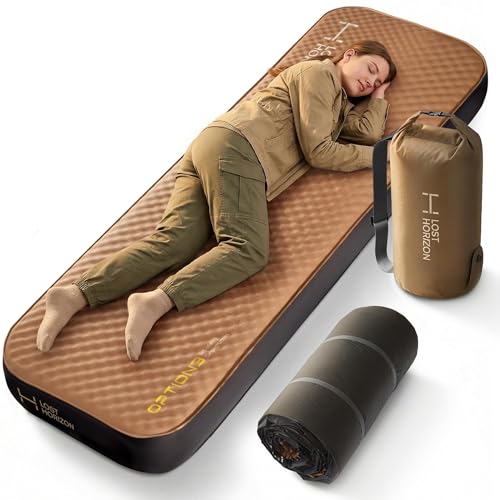
Lost Horizon Option3 Camping Cot 4.5-Inch

DULCE DOM 4-Inch Wide Camping Mat

DULCE DOM 4-Inch Double Camping Mat

DULCE DOM 4.7-Inch Inflatable Camping Mat

Lost Horizon Option3 Slim Single 3-Inch

Labviyhi Double Self-Inflating Camping Mat

ASRQGOAL Double Foot-Pump Camping Mat

DULCE DOM 4-Inch Double Foot-Pump Mat
What Each Pick Brings To The Table
Four inches of height gives this double pad a softer landing than the thinner self-inflating designs in the lineup. The 50D nylon outer fabric carries a TPU coating, a combination that resists abrasion and moisture while keeping packed weight manageable for car camping and backpacking.
Its built-in foot pump removes the need to carry a separate inflation device, which matters after a long drive or hike. Compared with the Labviyhi Double Self-Inflating Camping Mat, this model looks more practical for campers who want faster manual setup and a thicker sleeping surface.
What It Does Well
- The four-inch profile creates meaningful separation from dirt, roots, and rocky campsites.
- A built-in foot pump inflates the pad in about 20 seconds according to the stated design.
- Dual-layer valves help limit air loss through the night.
- The coated nylon shell suits damp grass and repeated packing cycles.
Things To Consider
- The generous cushioning will occupy more vehicle space than a slim air pad.
- Owners should dry the surface completely before storage to limit mildew and trapped moisture.
Quick Facts
Made For In Mind
Couples and families who value a roomy, well-cushioned surface more than minimal packed size will appreciate this setup.
A Better Fit Elsewhere
Solos with limited carrying capacity may prefer the narrower Lost Horizon Option3 Slim Single 3-Inch.
The Option3 takes a different approach from the air-heavy choices here, combining a 4.5-inch profile with 5.5 pounds of foam filling. Foam support is useful in a vehicle or campsite because it retains its shape instead of relying entirely on even air pressure through the night.
The listed capacity reaches 220 pounds, giving the design broader practical appeal for couples with a combined load near that figure. Unlike the shgsgWK Double Camping Sleeping Pad 4-Inch, this model favors substantial support and repeatability over compact backpacking weight.
Everyday Wins
- The 4.5-inch height offers a broad cushioning layer for side and back sleepers.
- Foam filling can provide consistent support without requiring a separate pump.
- The 220-pound capacity suits many couples and mixed-size adults.
- Its cot-style format feels suited to established campsites and vehicle-based trips.
Trade Offs
- The 5.5-pound foam filling makes it heavier than most inflatable alternatives.
- Its bulk may be inconvenient for hikers carrying camping gear over long distances.
- Letting trapped moisture sit inside the foam can make drying more demanding.
Built With In Mind
Car campers and couples who prefer steady support and can manage extra packed bulk will find this format more reassuring than a thin air pad.
Consider Something Else When
Hikers focused on carrying less gear will find the ASRQGOAL Double Foot-Pump Camping Mat easier to manage.
A wide sleeping surface gives two adults more room to settle in without the narrow-bed feeling common to many double pads. The four-inch profile uses independent air cells, meaning multiple small chambers share the load and create a more even sleeping plane than one undivided chamber.
For couples sharing a roomy tent, that balance of width and support looks sensible. The built-in foot pump also distinguishes it from the DULCE DOM 4.7-Inch Inflatable Camping Mat, which prioritizes even more vertical cushioning over this model’s wide, feature-led layout.
The Value In It
- Four inches of height reduces contact with hard or uneven ground.
- Independent air cells help spread body weight across the surface.
- The integrated foot pump eliminates a separate inflation accessory.
- A 75D TPU-coated shell offers a stouter starting point for frequent outdoor use.
Small Caveats
- The wide format may not fit smaller tents even though it suits couples well.
- Multiple air cells need consistent pressure, so checking the valve before bedtime is worthwhile.
Technical Sheet
The Right Fit
Couples with a spacious tent and a preference for even pressure distribution will appreciate the wide layout.
Swap It Out When
Campers with a very small shelter should compare the narrower Labviyhi Double Self-Inflating Camping Mat.
This DULCE DOM double pad focuses on the details that shape nighttime comfort: four inches of height, independent air chambers, and a built-in pillow. The pillow is a small convenience, but it keeps heads off the cool outer fabric and reduces the need to arrange a separate cushion.
For a campsite with rough terrain, the 75D TPU-coated fabric and dual-layer valve provide a practical combination of abrasion resistance and air retention. It shares the core construction of the DULCE DOM 4-Inch Double Foot-Pump Mat, though this listing positions the integrated pillow more clearly.
Points In Its Favor
- Independent air cells support the torso, hips, and shoulders across the surface.
- The four-inch height gives side sleepers a thicker layer beneath the hip and shoulder.
- An integrated pillow reduces one extra camp item.
- The foot pump supports quick setup after a long day outdoors.
Worth Noting
- The built-in pillow suits light-pillow sleepers better than those who need substantial loft.
- Air chambers should be fully settled before bedtime to avoid uneven contact points.
- The fabric needs air-drying after use on damp ground.
Who Should Grab It
Side-sleeping couples who value a pillowed, cushioned setup will find this model particularly easy to appreciate.
Where A Sibling Pick Shines
Campers wanting greater vertical clearance should consider the DULCE DOM 4.7-Inch Inflatable Camping Mat instead.
The defining advantage here is height. At 4.7 inches, the inflatable surface provides more vertical separation from the ground than the four-inch DULCE DOM models, which can make rocky sites and sloping pitches feel less direct.
Independent air chambers divide the load across the sleeping area, helping the pad support the back, hips, and shoulders rather than relying on one uninterrupted air volume. For comfort-focused couples, that added height may matter more than the extra space this design takes when packed.
What Pays Off
- Extra height provides strong separation from hard campsite surfaces.
- Multiple air chambers promote more even pressure distribution.
- The thick profile benefits back and side sleepers differently, with side sleepers feeling the greatest separation.
- Support across the hips and shoulders can make uneven ground feel more manageable.
- The 4.7-inch profile is well suited to car camping where packed bulk matters less.
Practical Considerations
- The unusually thick profile may make folding and vehicle storage more demanding.
- Because this listing focuses on cushioning, couples should confirm the final dimensions against their shelter.
- Allow time to fully dry the pad before rolling it into storage.
Key Product Details
Perfect Match For
Comfort-first couples camping on hard or uneven ground will gain the most from the extra height.
Another Choice May Suit
Minimalist packers will find the flatter profile of the Labviyhi Double Self-Inflating Camping Mat easier to carry.
This is the one solo format in the lineup, and that distinction keeps it relevant: solo campers often have more usable tent floor area than couples do. Its 62-by-26-inch shape fits narrow spaces, including vehicle interiors and small tents where a full double pad would feel crowded.
The three-inch height remains substantial, though it offers less isolation than the Lost Horizon Option3 Camping Cot 4.5-Inch. I would treat this as a solo-space option or a reference point for what couples may need to give up when every inch inside the shelter counts.
The Helpful Details
- The 62-by-26-inch footprint targets narrow sleeping areas.
- A three-inch profile still separates the body from the ground.
- Foam support avoids a powered or foot-pump setup.
Less-Strong Areas
- The single-person format does not provide shared sleeping space for two adults.
- It is less suitable than a double pad for couples dividing a small tent.
- Foam interiors need careful drying after damp trips to prevent residue or odor.
- The three-inch profile is thinner than the 4.5-inch Option3 model.
Whose Shelf It Belongs On
Solo campers, road travelers, and small-tent occupants will value the narrow, space-conscious layout.
Reach For A Different Pick When
Couples sharing one shelter should choose one of the double designs, such as the ASRQGOAL Double Foot-Pump Camping Mat.
Automatic expansion makes this model straightforward after a long day outdoors. Opening the valve allows the foam core to draw in air and reach full size in roughly three minutes, a gentler setup process than actively pumping a thick air chamber by foot.
At 190 by 130 centimeters and 5 centimeters thick, it offers a practical shared area with a 3-kilogram packed weight. That balance feels more road-camp oriented than backpacking-oriented, especially beside the featherweight positioning of the ASRQGOAL Double Foot-Pump Camping Mat.
What Stands Out
- The foam core expands without a hand or foot pump.
- A roughly three-minute setup shortens the process after arrival.
- The double dimensions provide space for two adults.
- The 5-centimeter thickness softens contact with uneven ground.
Details To Watch
- The 3-kilogram weight is substantial for long backpacking routes.
- The 2-inch profile provides less cushioning than the four-inch choices.
- Self-inflation still requires time and a level surface for even expansion.
Feature Snapshot
Best Suited To
Car campers who value unattended setup more than low packed weight will find this self-expanding format practical.
Not Your Match When
Long-distance hikers will likely prefer the lighter-feeling ASRQGOAL Double Foot-Pump Camping Mat.
The ASRQGOAL model keeps setup lean with a foot pump built into the sleeping surface. Its stated inflation time is about 30 seconds, which is considerably faster than allowing a foam core to expand on its own or carrying a separate pump for a larger double air mattress.
Measuring 195 by 125 centimeters and 5 centimeters thick, it fits the category of shared pads designed to balance usable width with manageable packing. Depending on the tent, 195 centimeters is enough for two campers to sleep side by side, though it is narrower than several four-inch alternatives.
Key Advantages
- Built-in pumping removes mouth inflation and a separate pump.
- The stated 30-second setup shortens the transition into camp mode.
- A waterproof-oriented design suits exposure to damp campsite surfaces.
- The 5-centimeter profile offers basic cushioning without a very bulky structure.
- Compact packing makes it more travel-friendly than thick foam models.
Practical Considerations
- The narrower 125-centimeter width may feel snug for larger adults.
- Two-inch cushioning is modest beside the 4.7-inch DULCE DOM model.
- Cleaning and complete drying remain important after use on wet ground.
Who Will Love This
Hikers and weekend campers who want quick inflation, easy storage, and a less bulky profile will appreciate this format.
Another Choice May Suit
Couples prioritizing more shoulder and hip cushioning should consider the DULCE DOM 4-Inch Double Camping Mat.
Four inches, a foot pump, and a 75D TPU-coated shell create a sensible middle ground between cushioning and convenience. Independent air chambers help distribute pressure, while the dual-layer valve is designed to slow the loss of firmness through the night.
This makes the mat a practical option for regular couples who camp in mixed terrain but do not need the extreme height of the DULCE DOM 4.7-Inch Inflatable Camping Mat. I would still check packed dimensions against the vehicle or tent, since thickness can make the folded package larger than its listed floor size suggests.
What Helps Most
- Four inches of height cushions shoulders and hips on uneven ground.
- The foot pump removes a separate inflation accessory from the gear list.
- Independent air cells create a more distributed sleeping surface.
- 75D TPU-coated fabric provides a durable exterior for regular trips.
- The double format keeps couples on one surface without using a full cot frame.
Honest Caveats
- The padded surface is bulkier than a two-inch inflatable double pad.
- Weight is not listed, so backpacking suitability remains unclear.
- Check the valve after inflation and dry the shell before storage.
Core Details
The Right Fit
Regular couples who want thick cushioning, a durable shell, and simple inflation will find this model well balanced.
Look Elsewhere When
Travelers who prioritize minimum packed bulk should compare the ASRQGOAL Double Foot-Pump Camping Mat.
What Matters Before Choosing A Shared Sleeping Pad
Start With the Tent Floor
A mattress cannot outperform the shelter around it. Measure the interior floor at the widest and narrowest points, then leave room for the tent walls and doors. A pad that looks generous in a product photo can lose useful space once it is inflated inside a tapered tent.
Thickness Is Only Half the Comfort Equation
A four-inch pad can feel excellent on one campsite and firm on another, depending on the surface underneath. Look for internal air cells or foam support that distributes weight, then consider how the sleeping surface feels beneath the hips and shoulders. Taller models help with isolation, but they also pack into a larger bundle.
Choose Setup By The Trip
Foot pumps suit campers who want fast, active inflation. Self-inflating foam designs are quieter and easier to set up after a long day, but they usually carry more bulk. Backpackers should account for the packed weight alongside the stated floor dimensions, while vehicle campers may gain more from a stable, thick design.
Packing Details That Change The Decision
Pitfalls Shoppers Hit
Choosing by thickness alone overlooks tent fit, packed weight, valve design, and sleeping width. Measure the usable floor before ordering, and leave time to test inflation at home. Store the pad dry and loosely folded so trapped moisture does not create mildew or damage the valve seal.
What The Extra Money Goes Into
Higher-priced designs often add thicker material, tougher coated fabric, integrated pumps, pillows, or more complex air chambers. Those features matter most for repeated campers, side sleepers, and rough campsites. A simpler pad remains sensible for light-duty trips and limited packing space.
Frequently Asked Questions
How Thick Should A Two-Person Camping Mattress Be?
A three- to four-inch pad offers a practical balance of cushioning and packed size. Height beyond four inches can improve ground isolation, but bulk and vehicle storage become more important trade-offs.
Are Self-Inflating Mattresses Better Than Air Mats?
Self-inflating foam models expand with little effort but weigh more. Air mattresses usually pack smaller and may include a foot pump, so they suit trips where carrying weight matters more than automatic expansion.
Can Two Adults Sleep On A Double Camping Pad?
Most double pads are designed for two adults, but body size and sleeping position affect comfort. Wider models benefit shoulders, while thicker models reduce pressure around the hips and lower back.
How Do I Prevent Mildew On A Camping Mattress?
Open the valves and allow air to circulate until every surface is dry. Clean visible dirt gently, avoid packing the mattress while damp, and store it in a breathable location away from standing moisture.
Do I Need A Built-In Foot Pump?
A built-in pump removes one accessory from the gear list and speeds setup. Campers who already carry a small pump may gain little extra value, while first-time inflatable-pad owners may find the integrated design easier to manage.
Final Verdict
The best shared camping mattress depends on where the trip takes you. Thick four-inch pads suit couples seeking better ground isolation, compact foot-pump models favor easier transport, and foam-filled designs make more sense for vehicle-based camping. Match the sleeping surface to the shelter, pack weight to the route, and expected comfort to personal sleeping style.
