

Heating water at a campsite is more complicated than carrying a small appliance and pressing a switch. Propane, pump pressure, battery placement, hose length, and storage space all affect how quickly a campsite becomes comfortable, especially for solo campers, families, and anyone moving between an RV and a remote site.
I focus on practical details such as heating method, temperature control, included accessories, safety functions, and the amount of gear a setup requires. The picks include dedicated hot-water systems for showers and gear washing, plus portable power stations and lighting that support a more complete camp setup. Some options use rechargeable power, while others rely on standard batteries or solar charging.
The Main Contenders

CAMPLUX Nano 3 Ultra Portable Propane Water Heater

BLUETTI AC200PL Portable Power Station
EcoFlow Delta 3 Classic Portable Power Station
Boakboary Flameless Battery Tea Lights 50-Pack

CAMPLUX Nano 3 Max Portable Propane Water Heater

CAMPLUX Nano 3 Pro Portable Water Heater

Brightech Ambience Pro 27 Ft Solar String Lights

CAMPLUX Nano 3 2-D Battery Water Heater

CAMPLUX Nano 3 Compact Water Heater Kit
More On The Choices That Made The List
The CAMPLUX Nano 3 Ultra is built for camps where shower temperature consistency matters as much as having hot water at all. Its rechargeable pump removes the need to manage a built-in battery during an extended trip, while the temperature controls make it more suitable for repeated use than a basic on-off model. I see the strongest fit among campers who want a dedicated shower station rather than a general-purpose camp appliance.
Compared with the CAMPLUX Nano 3 Pro, the Ultra places more emphasis on steady temperature adjustment and rechargeable operation. That makes it attractive for RV storage, glamping setups, and weekend trips where carrying spare batteries is inconvenient. The trade-off is a more feature-heavy system that needs careful charging and a dry place between outings.
The Good Stuff
- Temperature adjustment helps keep shower output consistent.
- Rechargeable operation simplifies trips away from an electrical connection.
- The pump-and-heater combination supports showers, rinsing gear, and outdoor washing.
- Overheat, dry-run, low-voltage, and tip-over protections add useful layers around unattended use.
Points To Note
- Propane equipment needs secure placement and ventilation during use.
- Owners should dry the pump and hoses before storage to reduce mineral and moisture residue.
Key Specs
Who It Suits Best
It suits campers with an RV, glamping setup, or regular weekend site who value controlled water temperature and rechargeable pump operation.
Where Another Pick Suits Better
CAMPLUX Nano 3 2-D Battery Water Heater fits hikers who prefer standard batteries over a rechargeable system.
The BLUETTI AC200PL is not a water heater, but it fills the same larger camp-power gap created by high-demand appliances. Its 2,304Wh battery and 2,400W output give it more capacity than the EcoFlow Delta 3 Classic, making it the stronger fit for RV batteries, tools, and several devices running at once. LiFePO4 chemistry is also relevant for campers who prioritize a long-lived battery format over a lightweight unit.
The 48V RV connection and solar input make this useful for extended stays where engine idling and extension cords are inconvenient. It is bulkier than a weekend power station, and the higher capacity only pays off when the camp regularly runs demanding equipment.
The Value In It
- 2,304Wh capacity provides useful headroom for larger camp loads.
- 2,400W output suits appliances and tools that exceed smaller station limits.
- RV charging supports a practical connection at equipped campsites.
- Solar replenishment reduces dependence on shore power for longer stays.
Trade Offs
- The larger battery adds weight and occupies more vehicle storage than the EcoFlow option.
- Actual runtime depends heavily on load size, battery level, temperature, and conversion losses.
- Solar charging speed is not a substitute for planning around weather and available sunlight.
Feature Snapshot
Built With In Mind
It fits RV travelers, overlanders, and camp owners who regularly power more than a phone and a small appliance.
Consider Something Else When
EcoFlow Delta 3 Classic is a more manageable choice for weekend campers who do not need the BLUETTI AC200PL's larger capacity.
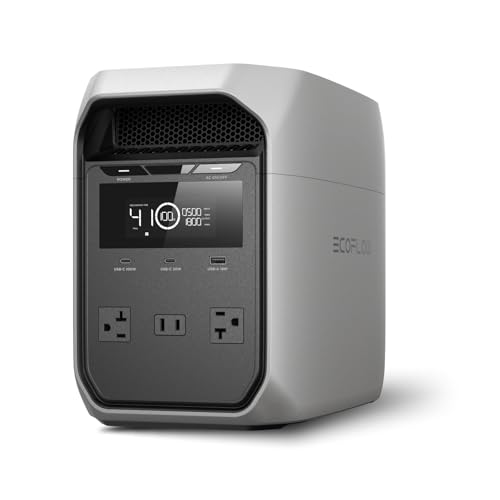
The EcoFlow Delta 3 Classic is the more portable power option in this roundup, with 1,024Wh of capacity and 1,800W of AC output. That combination makes it a practical companion for phones, laptops, refrigerators, and smaller appliances at a weekend camp, especially compared with the much larger BLUETTI AC200PL. The fast charging claim also matters after a day outdoors, when restoring power before evening use is useful.
I would not treat the listed output as permission to run every appliance at once. A careful load plan prevents battery strain and makes the station more practical for ordinary family camping.
Strengths Worth Knowing
- 1,024Wh capacity is easier to manage for weekend trips than a 2,304Wh system.
- 1,800W AC output covers many common camp appliances.
- Fast AC charging helps restore capacity during a lunch stop or indoor transition.
- Smaller energy reserve reduces the amount of gear reserved for power support.
Smaller Limitations
- It cannot match the BLUETTI AC200PL for sustained high-output equipment.
- Runtime falls quickly when a refrigerator or microwave runs near its limit.
- Campers should keep ports covered and the unit dry during rain or heavy dew.
Quick Facts
Right Fit For
It suits weekend campers who need reliable power for devices, lights, and a small refrigerator without carrying a large station.
Reach For A Different Pick When
The BLUETTI AC200PL is the better fit for RV travelers with heavier electrical demands and room for a larger battery.
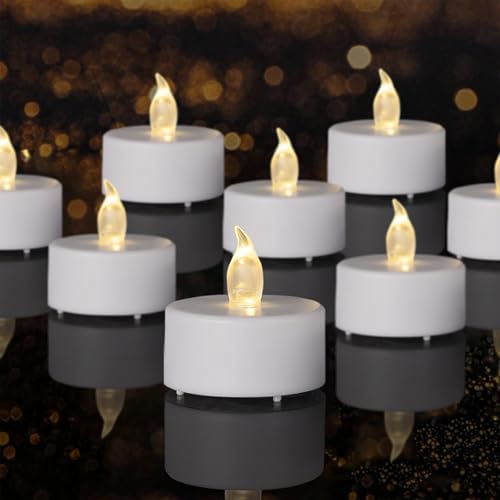
The Boakboary tea lights do not heat water, but they solve a different camping comfort problem: creating gentle ambient light around a table, tent, or outdoor meal. The warm white LED effect gives the campsite a softer appearance than a bright utility lantern, while the 50-piece format makes it easy to arrange several clusters. That makes it a useful supporting choice for couples, families, and small gatherings.
Because each light uses its own CR2032 battery, setup is simple and there is no charging station to manage. The limitation is obvious: this is decorative lighting, not a substitute for a lantern, task lamp, or heater.
What It Does Well
- Warm white light creates a pleasant table or tent-side atmosphere.
- Flameless operation avoids open flames around tents, tablecloths, and decorations.
- Fifty lights allow flexible arrangements for dinners, games, or small events.
- Individual battery operation keeps the pack portable and simple to distribute.
Small Caveats
- Battery lighting will dim or stop after extended use, depending on access and conditions.
- The warm glow is not strong enough for cooking, navigation, or detailed campsite tasks.
Who Will Love This
It suits campers who want relaxed decorative lighting for a van, tent, picnic table, or campsite celebration.
Another Choice May Suit
Brightech Ambience Pro string lights are the better choice for campers who need one continuous run of overhead lighting.
The Nano 3 Max targets regular camp use with rechargeable pump power and a temperature display that helps guide adjustment. It fits the middle ground between the Ultra's more detailed temperature controls and the simpler Nano 3 Pro approach. For fishing trips, glamping, and camping with children, that visibility can be reassuring when the water source is an unfamiliar bucket or tank.
The setup still depends on propane, water, and a stable operating surface. Campers should allow the unit to cool and dry before packing it away, particularly after a humid morning or a dusty site.
Well-Handled Touches
- Real-time power and temperature displays reduce guesswork during setup.
- Rechargeable pump operation avoids disposable battery replacement.
- The 50–122°F adjustment range supports showers and outdoor rinsing.
- Quick-connect components reduce setup time after arrival.
Practical Considerations
- The display and rechargeable controls add complexity compared with a simple battery model.
- The heater still requires a propane cylinder, water container, and adequate working space.
Made For
It suits campers who want rechargeable pump operation and a readable temperature reference without moving to the most control-heavy model.
A Better Fit Elsewhere
CAMPLUX Nano 3 Ultra is the stronger fit for campers who prioritize tighter temperature consistency and more detailed safety controls.
The Nano 3 Pro is a straightforward choice for a first camping shower system. Its on-demand propane heating and compact pump format avoid the broader power requirements of a portable power station, while the 1-pound cylinder format is familiar to many campers. That simplicity makes it easier to explain to a new user than a station with several charging and output settings.
The model works best with realistic expectations. Instant water does not mean unlimited hot water, and the system still depends on carrying fuel, water, and the required connections.
Points In Its Favor
- On-demand heating suits quick showers and rinsing tasks.
- The compact format is easier to carry than a larger fixed water-heating setup.
- Flame-failure and over-temperature protections support controlled outdoor operation.
- The system avoids carrying a separate power station solely for water heating.
Possible Compromises
- Fuel consumption and water capacity limit long sessions.
- Standard accessories still need secure storage after use.
Best Suited To
It suits beginners, weekend campers, and solo hikers who want a compact shower system with fewer operating controls.
Where A Sibling Pick Shines
CAMPLUX Nano 3 Max is the better fit for campers who prefer a rechargeable pump and a visible temperature display.
The Brightech Ambience Pro extends lighting across a tent, patio, or vehicle awning instead of placing a single pool of light on one table. Its 27-foot string and 12 bulbs suit larger camps, while the detachable solar panel gives campers more placement flexibility than a fixed panel. I would place the panel where direct sunlight is reliable, since shade affects the available charge.
The Edison-style bulbs are intended for atmosphere, not heavy-area lighting. The waterproof string and shatterproof LED construction help with outdoor exposure, although connectors and the panel still benefit from careful storage.
Useful Touches
- 27-foot coverage reaches across a tent, canopy, or outdoor seating area.
- Twelve bulbs distribute light more evenly than a single lantern.
- Detachable solar panel allows placement based on available sunlight.
- Shatterproof LED bulbs suit camps where glass would be inconvenient.
Details To Watch
- Solar performance depends on weather, panel angle, and direct exposure.
- The bulbs create ambient light rather than strong task illumination.
Core Details
Built With In Mind
It suits RV campers, glamping setups, and families decorating a larger outdoor living area.
Not Your Match When
Boakboary tea lights suit a smaller table or tent where simple individual placement matters more than a long string.
This CAMPLUX Nano 3 version is built around mobility. It weighs 13 pounds and measures approximately 15.7 by 6.7 by 14.5 inches, which makes it easier to place in a truck bed, RV corner, or backpack arrangement than a full-size water heater. Standard D-type batteries remove the need to maintain a rechargeable pack during a remote trip.
Quick-fit connectors and extension hoses give the system more placement flexibility around an RV or campsite. The tradeoff is that batteries and a 1-pound propane cylinder are separate supplies that must be packed and monitored.
Where It Delivers
- 13-pound weight supports mobile camping and overlanding.
- Two standard D batteries simplify preparation away from mains power.
- Extension hoses allow the heater to sit away from the water source.
- Flame-failure, overheat, and tip-over shutoffs add practical protection.
Less-Strong Areas
- Batteries and a propane cylinder are not included with the system.
- Standard battery operation may be less convenient for campers already carrying rechargeable power.
Travel Ready For
It suits hikers, overlanders, and solo campers who value compact storage and standard-battery flexibility.
Swap It Out When
CAMPLUX Nano 3 Ultra is the better fit for a fixed campsite where temperature adjustment and rechargeable pump power are priorities.
The CAMPLUX Nano 3 Compact Water Heater Kit is positioned as an all-in-one outdoor washing system rather than a shower-only device. Its pump, quick-connect cables, and extension hoses support showers, gear washing, pet rinsing, and campsite chores, while the stated three-second heating claim helps keep short sessions from feeling wasteful. That versatility makes it attractive for families and campers who need more than personal rinsing.
At 13 pounds and approximately 15.7 by 6.7 by 14.5 inches, it shares the same compact footprint as the 2-D battery version. The rapid setup claim still assumes a ready water source, fuel, batteries, and a safe operating area.
Benefits That Matter
- Three-second heating supports quick shower and cleaning sessions.
- Pump, cables, and extension hoses create a complete washing setup.
- Compact dimensions suit solo campers, couples, and RV storage.
- Multiple protection functions support use on uneven outdoor ground.
Things To Weigh Up
- The listed rapid heating does not mean unlimited continuous hot water.
- Propane, D-type batteries, and a water container add preparation and packing steps.
- Hoses and cables need careful cleaning before storage to prevent blockages.
Multi-Use Pick For
It suits families, solo campers, and outdoor workers who need hot water for showers, pets, equipment, or campsite cleanup.
A Better Fit Elsewhere
CAMPLUX Nano 3 Ultra is the better fit for campers focused specifically on temperature control rather than a broader cleaning kit.
What Matters Before Choosing A Camp Heating Setup
Power type sets the pace of the trip. Rechargeable pumps reduce battery packing, while standard D-cell systems suit locations without a dependable charging source. Propane heating remains common across the dedicated shower systems, so fuel storage and ventilation deserve attention before arrival.
Capacity and output need to match the load. A 1,024Wh station may handle weekend devices and a small refrigerator, while a 2,304Wh unit gives RV travelers more room for tools and larger equipment. The higher output number matters more than capacity alone when several appliances run together.
Water source and connection planning
A shower system needs a stable water supply, enough pressure for the pump, and hose length that reaches a suitable shower position. Extension hoses are useful around an RV, but extra connections create more surfaces to clean and store. Bucket, tank, and vehicle-based arrangements each have different space requirements.
Temperature control and safety
Adjustable temperature control helps prevent the awkward swings that come from a simple on-off system. A display, dry-run protection, overheat cutoff, flame-failure response, and tip-over shutoff add useful layers, but placement still matters. Keep equipment on stable ground and follow the manufacturer’s operating instructions.
Accessories and storage
A complete kit can be a strength or a burden depending on the trip. Pumps, cables, hoses, regulators, and water containers may be necessary at home but excessive for a short hike. Compare packed dimensions and weight with the number of tasks the system will handle, not only the listed heating speed.
Common Mistakes To Avoid
Hidden Buying Traps
- Confusing decorative lights with heating equipment. A tea light or string light can improve atmosphere, but neither warms water.
- Ignoring fuel and battery exclusions. Some propane cylinders and D-type batteries must be purchased separately.
- Overlooking water pressure. A pump may need a sufficiently tall water source and stable flow to work as intended.
- Leaving safety functions unmentioned. Tip-over, dry-run, and flame-failure protections matter more on uneven or unattended terrain.
The Upgrade Payoff
Higher-tier systems commonly add rechargeable operation, temperature displays, stronger controls, or faster charging. Those features help in multi-day camps, RV stays, and situations where a fixed campsite allows careful setup. A basic model can be more sensible for occasional close-to-home trips where simplicity and lower packing weight matter more.
Frequently Asked Questions
Are propane camp showers battery powered?
The pump may run on rechargeable power or standard D-type batteries, while propane supplies the heat. Battery operation does not mean the water heater itself is battery powered.
Can battery powered camp showers heat water instantly?
Some systems advertise heating within seconds, but the result is intended for on-demand use rather than unlimited continuous hot water. Water pressure, fuel, and operating conditions still affect the result.
Is a portable power station necessary for a camping water heater?
No. A dedicated propane shower system can run its pump independently, while a portable power station is useful for devices, lighting, refrigerators, and other camp electrical loads.
Which heater is easiest to carry?
The CAMPLUX Nano 3 models are designed around compact dimensions and portable use. Actual carrying comfort depends on whether the system is packed as one unit or separated into hoses, cables, regulator, water container, and fuel.
How should I maintain a camping water heater?
Allow the unit to cool, clean the pump and hoses after use, and store connections completely dry. Keep the propane connection and battery compartment protected from moisture and dirt.
Final Verdict
The most practical choice depends on the campsite rather than a single ranking. CAMPLUX Nano 3 Ultra suits controlled showers, the standard-battery Nano 3 supports mobile setups, and the compact kit handles broader outdoor cleaning tasks. Power stations and lighting add useful support for a complete camp, especially for families and RV travelers. Choose the system that matches the water source, fuel plan, and amount of gear that must fit in the vehicle.
