

Battery lanterns make tent setup, late-night hikes, and storm-driven power outages easier to manage. The right model adds useful brightness, long run time, and a compact form that fits in a backpack or beside the emergency kit. I considered rechargeable and replaceable-battery options, multi-light sets, water resistance, and flexible lighting modes for this 2026 roundup.
An Overview Of The Picks

EverBrite Rechargeable Camping Lanterns, 450 Lumens

AYL LED Camping Lantern, 1800 Lumens

EverBrite 3-Pack LED Camping Lights, 4 Modes

AYL Rechargeable Camping Lanterns, 1800 Lumens, 2-Pack

AYL Rechargeable 360-Degree Camping Lantern

LETMY 4-Pack Collapsible Battery Lanterns, 600 Lumens

Eveready X-250 LED Camping Lanterns, 2-Pack, Black

LETMY 4-Pack Rechargeable Solar Camping Lanterns
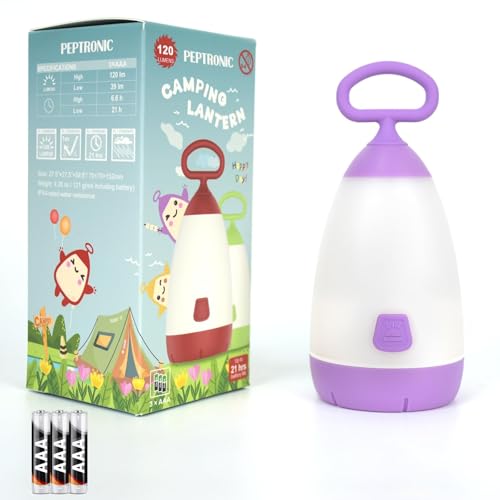
PEPTRONIC Kids Camping Lantern & Night Light, Purple
Meet The Standout Selections
Warm light makes a tent feel more comfortable, while cooler output helps with meal preparation or campsite setup. This two-lantern set gives me enough control for both uses without the bulk of a large camp lamp.
Compared with the high-output AYL model later in the list, the EverBrite prioritizes softer color choices and a 450-lumen ceiling. It looks more at home in a family tent than lighting a broad pitch alone.
A Favorable Mix
- Five output settings cover 45, 110, 145, 350, and 450 lumens.
- Warm settings create gentler light for winding down in the tent.
- Two units let me place one light outside and another beside the sleeping area.
- The built-in 2000mAh battery avoids loose battery packing.
Trade Offs
- 450 lumens may feel modest beside an 1800-lumen model.
- The 3.7V, 7.4Wh battery is built in, so spare cells cannot extend runtime.
- Charging before each trip remains essential because the battery is not removable.
Key Specs
Made For
I favor this set for couples, families, and casual campers who value warm light and simple charging.
A Better Fit Elsewhere
Campers illuminating a large shared pitch get more reach from AYL LED Camping Lantern, 1800 Lumens.
Raw brightness makes this the practical choice for a large tent, a food-preparation area, or a storm that darkens the whole home. Its 1800-lumen maximum is four times the output of the first EverBrite set, so fewer lamps may cover more ground.
The tradeoff is less nuance for quiet tent use. I would save the brightest setting for setup and emergencies, then use a lower mode once dinner is finished.
Real-World Strengths
- Forty-six LEDs provide substantial light for work areas.
- Four modes make it easier to balance brightness against battery use.
- High output is useful during power outages or early-morning campsite tasks.
- One lamp keeps a crowded gear bag simpler than carrying several small lights.
Points To Note
- Less warm-color detail is listed than on the EverBrite model.
- A single bright lantern offers less placement flexibility than a multipack.
- High output can shorten runtime compared with dimmer settings, though duration figures are absent.
Quick Facts
Who It Suits Best
I recommend this model to households and campers who need dependable area lighting more than decorative color.
Another Choice May Suit
EverBrite 3-Pack LED Camping Lights, 4 Modes offers more units for families that need separate lights in several tents.
Three bulb-shaped lights add a playful touch to a family camp without requiring three matching fixtures. The green, teal, and hot-pink set makes each tent or activity area easy to distinguish after dark.
Unlike the powerful AYL lantern, these are compact units built around placement and mode control. Each light weighs about 30 grams, based on the supplied information, so carrying the group adds little mass.
Features That Help
- High, low, strobe, and SOS modes cover everyday and signaling needs.
- Three distinct colors help identify separate tents or family spaces.
- The ABS plastic housing keeps each unit light enough for children or a small tent.
- SOS mode is useful for signaling during an outdoor incident.
Small Caveats
- No lumen or battery-capacity figures are supplied, which limits fine comparison.
- The small format may provide less area light than a full-size camp lantern.
- Cleaning around the bulb-shaped housing may take extra care after dusty use.
Right Fit For
I see this set working especially well for families with children who enjoy assigning a colored light to each sleeping area.
Swap It Out When
Campers preparing large meals need the broader coverage of AYL LED Camping Lantern, 1800 Lumens.
Two 1800-lumen lanterns solve both coverage and placement, letting me split a bright lamp between the tent and food area. Rechargeable operation removes the need to reserve a pocket for spare cells.
The 4400mAh battery also functions as a power bank, which is useful for keeping a phone close at hand. IP44 water resistance adds useful protection around damp campsites, although it does not make the lantern suitable for immersion.
Notable Gains
- Two high-output lights provide flexible room-to-room coverage.
- The power-bank function adds utility beyond illumination.
- IP44 resistance suits splashes, damp air, and campsite mud exposure.
- Four modes help reduce unnecessary brightness and energy consumption.
Practical Considerations
- Recharge before departure because runtime figures are not supplied.
- The power-bank feature still depends on remaining internal battery capacity.
- Two rechargeable units require more charging time and storage space than one.
Feature Snapshot
Built With In Mind
I favor this pair for weekend campers, tradespeople traveling off-grid, and households keeping two bright rooms ready during outages.
Look Elsewhere When
Travelers prioritizing low weight may prefer LETMY 4-Pack Rechargeable Solar Camping Lanterns for simpler power planning.
Hanging in the center of a tent or pointing along a night trail, this model changes function without requiring several devices in my pack. Its 360-degree lantern output serves group spaces, while the flashlight and spotlight modes narrow the beam for walking or task lighting.
The rechargeable design and power-bank function make it more versatile than a basic replaceable-battery lantern. Exact lumen and runtime figures are missing, though, so brightness comparisons remain approximate.
Positive Takeaways
- Three lighting approaches suit hanging, walking, and directional tasks.
- Wide lantern coverage is useful at the center of a group campsite.
- Power-bank capability reduces dependence on separate charging hardware.
- IPX4 water resistance handles ordinary splashes around camp.
Where It May Fall Short
- No lumen figure is provided for realistic output comparison.
- The rechargeable battery cannot be replaced with a standard cell.
- Multiple modes may take some practice during a hurried nighttime setup.
Who Will Love This
I recommend this model to hikers, weekend campers, and households wanting one light for several everyday situations.
Consider Something Else When
Large-area cooks get more transparent output data from AYL Rechargeable Camping Lanterns, 1800 Lumens, 2-Pack.
Four collapsible lights let me stage a hallway, kitchen, and two bedrooms during an outage. Each lantern uses 65 LEDs to provide up to 600 lumens, with a translucent reflector spreading illumination around the unit.
Dimmable output and three color settings are more useful here than a single fixed tone. The collapsible form also reduces storage space, which matters for apartment closets and packed emergency totes.
The Practical Payoff
- Four units cover multiple rooms without repeated shopping.
- Dimmability allows softer late-night or bedside settings.
- The collapsible body simplifies compact storage between uses.
- Sixty-five LEDs create a broad 360-degree glow for group spaces.
Honest Caveats
- Each lantern is less powerful than the 1800-lumen AYL models.
- Battery type and runtime details are absent, complicating advance planning.
- Four collapsible parts can collect dust and should be opened occasionally for cleaning.
At A Glance
Made For
I value this set for apartment dwellers and families assembling a practical power-outage kit.
Where A Sibling Pick Shines
Eveready X-250 LED Camping Lanterns, 2-Pack, Black is simpler for campers who prefer replaceable batteries.
Replaceable batteries make this a straightforward choice for campsites where charging access is inconsistent. The compact X-250 format fits neatly in a storage tote, and two lights can cover separate tents or a main room and porch.
Compared with the rechargeable AYL pair, the Eveready setup takes less charging planning. It asks for more attention to spare batteries, however, especially before a multi-night trip.
What Helps Most
- Two compact lanterns provide separate lighting zones.
- Replaceable batteries support use where outlets are unavailable.
- The carry handle supports transport from the car to the tent.
- A water-resistant housing suits ordinary outdoor conditions.
Details To Watch
- Carry spare batteries because the cells are removable.
- Runtime varies with brightness, so high output is best reserved for shorter tasks.
- The compact size may offer less coverage than larger 600- or 1800-lumen lanterns.
Whose Shelf It Belongs On
I prefer these for traditional campers, school families, and anyone who prefers familiar battery changes over charging cables.
Another Choice May Suit
LETMY 4-Pack Rechargeable Solar Camping Lanterns gives households four units with several power options.
Three operating routes make this a reassuring choice for storm preparation. A built-in battery can charge through USB, the solar panel adds another option, and three AA cells provide a fallback for prolonged cloudy periods.
The four-light set is larger than most competing packs, but each unit can be placed in a separate room or along a campsite. Solar charging varies with exposure, so I would still replenish the internal batteries before departure.
Why It Works Well
- USB, solar, and AA battery inputs reduce dependence on one power method.
- Four units support distributed lighting across a home or campsite.
- Rechargeable internal batteries simplify repeated everyday use.
- The included USB cable supports familiar charging setups.
Less-Strong Areas
- Solar charging depends on direct exposure and suitable weather.
- AA cells are an alternative power source, not included with the set.
- Lumen output and full charging time are not provided.
Built With In Mind
I recommend this pack for households in storm-prone regions and campers carrying several days of gear.
Reach For A Different Pick When
LETMY 4-Pack Collapsible Battery Lanterns, 600 Lumens offers more explicit brightness information for area lighting.
Children’s sleepovers and family tents call for atmosphere as much as campsite coverage. This purple lantern uses a diffused 360-degree glow, with high, low, and RGB color-changing settings for reading, play, and settling down.
Unlike the brighter EverBrite set, this model emphasizes softer light and included AAA batteries. IPX4 water resistance makes it suitable for ordinary campsite splashes, though it is not designed to be submerged.
The Value In It
- Three AAA batteries are included for immediate use.
- The diffused body provides broad, gentle illumination.
- RGB mode adds engaging color for sleepovers and family camping.
- The threaded battery compartment helps reduce casual child access to the cells.
Small Limitations
- No lumen output is stated, so its task-lighting reach is unclear.
- Replaceable AAA cells require periodic inventory before a trip.
- The child-focused design offers less coverage than a full-size camp lantern.
Quick Facts
Who Should Grab It
I favor this lantern for families with children, indoor sleepovers, and quiet bedside lighting away from home.
Not Your Match When
Campers needing meal-preparation brightness should choose AYL LED Camping Lantern, 1800 Lumens instead.
What Matters Before Taking a Light Outside
Output and coverage
Lumens measure total light output, but beam shape and reflector design decide how that light spreads. I look for strong area light for tent interiors and food preparation, then reduce brightness for reading or bedtime.
Power and charging
Rechargeable models suit frequent users because they reduce loose battery clutter. Replaceable cells remain useful in remote areas, and a three-input model offers valuable flexibility during storms or extended trips.
Outdoor resistance and handling
IPX4 and IP44 ratings indicate protection against splashing water from different directions. Neither rating means submersion, so each lantern still needs sensible storage during heavy rain.
Size and placement
A single high-output lamp works well in one active area, while a multipack separates light between tents or rooms. I favor carrying exactly enough lights to improve placement without turning the lantern set into excess gear.
Mistakes Worth Avoiding
Mistaking brightness for suitability
A high lumen number does not guarantee pleasant light inside a small tent. Color temperature, diffuser quality, and mode controls often matter more for sleeping spaces.
Solar panels also work best with direct exposure and cannot be treated as an equal substitute for every charging session. I keep a cable or battery backup close at hand.
Where The Extra Money Goes
Higher-output lanterns tend to include larger batteries, more LEDs, power-bank functions, and broader mode controls. Those additions help during outages, multi-night camping, and work-heavy campsites, while simpler models remain sensible for casual tent lighting.
Frequently Asked Questions
How many lumens do I need inside a tent?
Around 100 to 450 lumens is usually enough for general tent tasks, based on the listed outputs in this roundup. I look for lower settings for reading and brighter output for cooking or repairs.
Are rechargeable camping lanterns better than battery models?
Rechargeable lights reduce spare-cell clutter and work well for frequent trips. Replaceable batteries can be more practical where charging access is limited.
Can IPX4 or IP44 lanterns get wet?
Both ratings support use around splashes and damp conditions. Submersion, washing, and exposure under powerful water jets remain unsuitable.
Is a four-pack useful for camping?
A four-pack helps families place one light in each tent or around multiple campsite areas. Solo campers can often manage with one or two units.
Which lighting mode is best for sleeping?
A low setting usually creates less direct glare than maximum brightness. Models offering warm or RGB modes also provide softer options for bedtime.
Final Verdict
I would choose the EverBrite rechargeable pair for comfortable family-camp lighting, the 1800-lumen AYL models for broad coverage, and the LETMY solar set for flexible power planning. The Eveready pair suits replaceable-battery preferences, while the PEPTRONIC model centers on gentle light for children. The most useful choice comes down to expected brightness, runtime evidence, and the number of places that need illumination.
