

Camping power ranges from a pocket-sized inverter for phones to a 2,048Wh station capable of running larger appliances. I’ve compared the capacity, continuous output, charging options, physical demands, and compatibility that shape daily use at a campsite. Battery-powered tools also create a practical alternative, but only where an existing compatible battery is already on hand. The right choice depends on whether the priority is compact portability, multi-day energy, sensitive electronics, or shared power across two campsites.
A Fast Comparison Of The Options
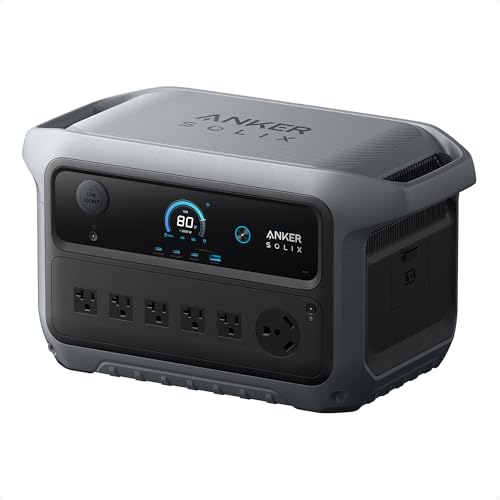
Anker SOLIX C2000 Gen 2 Portable Power Station

BLUETTI Elite 100 V2 Portable Power Station
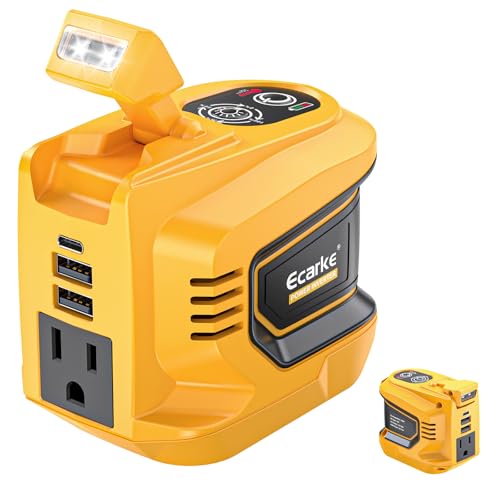
Ecarke 220W Portable Power Inverter for DEWALT 20V Batteries

ECOFLOW DELTA 3 Max Portable Power Station
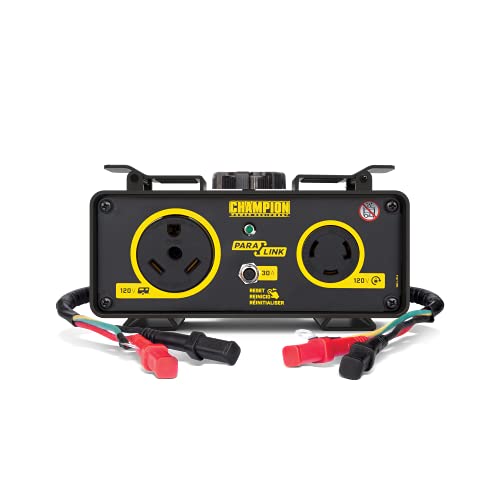
Champion Power Equipment 100740 ParaLINK Parallel Kit

Ecarke 220W DEWALT 20V Battery Inverter 2-Pack
Ecarke 550W Pure Sine Wave DEWALT Battery Inverter
Ecarke 350W Portable Power Inverter for DEWALT Batteries

Ecarke 350W DEWALT 20V Power Inverter
The Strengths Of Each Pick
The Anker SOLIX C2000 Gen 2 brings 2,048Wh of stored energy and 2,400W of continuous output, enough headroom for common camping appliances rather than a collection of small devices alone. At a busy campground, that distinction matters for a refrigerator, cooking equipment, or several charging leads running together.
It weighs considerably more than the compact inverters later in this list, so loading logistics deserve attention. In my view, campers trading portability for multi-day appliance support get the more complete package.
The Case For It
- The 2,048Wh battery can support a dual-door refrigerator for up to 32 hours under the stated conditions.
- Adding an expansion battery raises capacity to 4kWh and extends that refrigerator runtime to as much as 64 hours.
- AC and solar charging can replenish the full battery in 58 minutes.
- Low 9W standby consumption reduces the amount of capacity consumed while the station sits inactive.
Practical Considerations
- The larger battery and inverter hardware make this a heavier option for backpackers.
- Expansion capacity adds another component to store, recharge, and protect.
Quick Facts
Built With In Mind
Car campers and families running several electrical devices benefit most from this station’s capacity.
Consider Something Else When
Backpackers who only need phone charging get a lighter experience from the Ecarke 220W Portable Power Inverter for DEWALT 20V Batteries.
The BLUETTI Elite 100 V2 sits between a pocket inverter and a 2kWh station, giving campers 1,024Wh of capacity without moving into the heavier appliance class. Its 1,800W rated output provides useful headroom for a portable fan, small cooking load, or charging several devices at once.
Compared with the Anker SOLIX C2000 Gen 2, the trade-off is runtime rather than connectivity. For a weekend centered on phones, lights, and a modest appliance load, that balance looks sensible.
Standout Benefits
- Eleven ports support simultaneous charging across phones, computers, cameras, and other devices.
- The 1,800W rating is stated to handle loads covering up to 90% of common household appliances.
- A 1,200W AC input can replenish the battery in about 70 minutes.
- Solar input reaches as high as 1,000W, which helps campers with suitable panel access.
Worth Noting
- Its 1,024Wh capacity is roughly half that of the Anker and ECOFLOW stations here.
- Rapid charging still depends on access to a suitable input and adequate remaining battery charge.
- Owners of high-draw appliances may exhaust the smaller capacity sooner.
Feature Snapshot
The Right Fit
Weekend campers charging several electronics and running a small appliance get the most useful balance here.
Where Another Pick Shines
Campers who need a refrigerator running overnight get more energy from the Anker SOLIX C2000 Gen 2.
The Ecarke 220W Portable Power Inverter turns a DEWALT 20V tool battery into camping power, which is a different proposition from carrying a second battery system. Its 0.68-pound housing slips into a tool bag or backpack, and the built-in light adds utility after dark.
Power output and battery life remain tied to the installed pack, so this works best for people already invested in the platform. Compared with the BLUETTI, the saving is space, not stored energy.
Useful Highlights
- The 0.68-pound body is easy to carry in a backpack or glove compartment.
- One AC outlet, two USB-A ports, and one Type-C port cover several charging formats.
- The LED light provides a practical campsite and roadside companion.
Minor Gripes
- The battery and charger are separate purchases, which can make the setup less economical without existing DEWALT equipment.
- Runtime depends directly on the capacity and remaining charge of the tool battery.
- The 200W continuous output is modest beside the 1,800W and 2,400W station ratings.
Made For
Backpackers and tradespeople who already carry DEWALT 20V batteries gain a compact secondary power source.
Another Choice May Suit
Campers without tool batteries get a self-contained option from the BLUETTI Elite 100 V2.
The ECOFLOW DELTA 3 Max combines 2,048Wh of capacity with 2,400W of output, placing it alongside the Anker SOLIX as a serious car-camping option. Recharging from empty to 80% in 1.13 hours reduces downtime for people moving between campgrounds or preparing before a trip.
Its LFP battery chemistry is a useful distinction, but charging speed alone doesn’t determine the fit. A campsite with limited vehicle access may still need more stored energy than this station provides.
Good Reasons To Consider
- The 80% recharge figure makes short-notice departures more practical.
- An LFP battery is designed around a different chemistry from many portable stations.
- X-Boost mode is stated to provide up to 3,400W of continuous power for supported loads.
Trade Offs
- The boosted output is not interchangeable with 3,400W of nominal capacity.
- Fast charging requires a suitable power source and appropriate conditions.
- A 2kWh station remains substantial cargo compared with a tool-battery inverter.
Technical Highlights
Best Suited To
Road-tripping families who value rapid replenishment and appliance-level output benefit most.
Look Elsewhere When
Minimalist campers who only charge small electronics get a lighter setup from the Ecarke 220W Portable Power Inverter for DEWALT 20V Batteries.
The Champion Power Equipment 100740 ParaLINK Parallel Kit is not a battery or standalone power source. It connects two compatible 2,000W to 3,000W inverter generators, allowing their output to operate as a larger system for RV-style or equipment-heavy camping.
That distinction matters because fuel, engine servicing, and outdoor positioning become part of ownership. Compared with a silent battery station, it suits setups where substantial continuous power outweighs generator upkeep.
Useful Strengths
- Combines two compatible inverter generators into one higher-output setup.
- Allows lighter generator units to remain separate until extra capacity is needed.
- The 30-amp RV-ready configuration suits larger camping electrical demands.
Practical Considerations
- Two compatible inverter generators are separate requirements.
- Parallel operation does not recharge an internal battery because no battery is included.
- Owners must manage generator fuel, exhaust positioning, and routine engine maintenance.
Who It Suits Best
Large RV campers who already own two compatible inverter generators get a practical capacity increase.
A Better Fit Elsewhere
Campers seeking silent power without fuel handling should focus on the ECOFLOW DELTA 3 Max.
The Ecarke 220W DEWALT 20V Battery Inverter 2-Pack turns two tool batteries into separate power locations, which is useful across a tent, vehicle, and outdoor cooking area. Each 0.68-pound unit provides AC, USB-A, Type-C, and LED-light functions without requiring a full battery station.
The two modules do not create a single 440W pool of stored power, and each needs a compatible battery. For an already-equipped household, that separation is more useful than carrying two complete 2kWh stations.
Everyday Advantages
- Two units allow phones and lights to charge in different campsite areas.
- Each inverter can be placed beside the equipment it serves.
- The paired modules retain the low 0.68-pound carrying weight of the single version.
Details To Watch
- Two DEWALT batteries are required for full simultaneous use.
- Runtime remains limited by each tool battery’s capacity.
- Separate units need separate charging and cable management.
Who Will Love This
Camping households that share multiple work areas benefit from keeping one compact inverter with each group.
Reach For A Different Pick When
Campers needing sustained appliance power get more energy from the BLUETTI Elite 100 V2.
The Ecarke 550W Pure Sine Wave DEWALT Battery Inverter brings a cleaner AC waveform to a battery-tool format. A pure sine wave is a smoother, steadier form of AC power, which makes the unit more appropriate for computers and other electronics sensitive to irregular output.
Compared with the 220W Ecarke model, it raises the ceiling and adds a second AC outlet. The trade-off is greater size and dependence on a suitably charged DEWALT 20V battery.
Practical Pluses
- Cleaner AC output suits sensitive electronics better than an unmodified waveform.
- Two AC outlets allow more than one mains-powered device.
- Two USB-A connections and one 20W Type-C port cover common charging formats.
- The 600-lumen LED adds useful campsite lighting.
Honest Caveats
- The battery and charger are not included.
- Rated output still depends on battery compatibility and charge.
- Reported noise or connector fit can vary, so cable arrangements deserve attention.
Quick Technical Notes
Built For
Mobile professionals and campers running sensitive electronics from tool batteries get the most benefit.
Swap It Out When
Couples needing more overnight energy get a self-contained option from the BLUETTI Elite 100 V2.
The Ecarke 350W Portable Power Inverter for DEWALT Batteries is built around connection variety rather than stored capacity. Two AC outlets, two USB connections, and two Type-C ports make it useful for a campsite where different devices have become the main power concern.
Its output remains below the 550W Ecarke model, and the RGB light adds atmosphere rather than utility. People carrying mixed USB-C equipment may still find that port mix useful.
Why It Works Well
- Two AC outlets support more than one mains-powered accessory.
- Dedicated USB and Type-C connections reduce adapter clutter.
- DEWALT 20V battery compatibility turns existing tool packs into campsite energy.
Possible Compromises
- It includes no battery, so a DEWALT 20V pack must already be available.
- Multiple ports still share the inverter’s overall power capability.
- Colorful lighting does not replace a task light in a large work area.
The Right Fit
Tech-oriented campers with several USB-C devices benefit from the dedicated port selection.
Another Choice May Suit
Campers running electronics that favor smoother AC output get a better match from the Ecarke 550W Pure Sine Wave DEWALT Battery Inverter.
The Ecarke 350W DEWALT 20V Power Inverter keeps the product equation simple: one compact converter, one compatible tool battery, and 110V household output. At 1.35 pounds, it suits a glove compartment or tool bag, offering 350W for laptops, phones, fans, and compact projectors.
That simplicity means fewer choices than the connection-heavy Ecarke 350W model. For routine road-trip charging, though, the basic format may be easier to live with.
A Strong Showing
- The 1.35-pound housing is compact enough for routine vehicle storage.
- 350W output covers many travel electronics and small personal devices.
- An existing DEWALT 20V battery serves as the energy source.
Small Limitations
- The battery and charger are sold separately.
- Runtime follows the tool battery’s remaining charge and capacity.
- Owners should remove the converter after use to preserve the tool battery connection.
Essential Details
Made For
Road travelers carrying DEWALT tools gain an uncomplicated source of AC power for essential electronics.
Consider Something Else When
Campers needing multiple USB-C connections get a more suitable interface from the Ecarke 350W Portable Power Inverter for DEWALT Batteries.
Matching Power To The Campground
Start With Energy Needs Capacity, expressed in watt-hours, determines how much stored energy a station holds. Continuous output, measured in watts, governs which appliances can operate at once. A 350W inverter may run several phones or a small fan, while a 2,400W station can support a much broader appliance load.
Account For Recharge Access AC charging works well for campgrounds and homes with reliable outlets. Solar input adds flexibility, although charging time depends heavily on panel conditions, placement, and the station’s accepted input. Rapid charging is useful before a trip, though campsite access still determines long-term flexibility.
Match Connections To Devices AC outlets serve conventional plugs, while USB-A and Type-C connections simplify charging cables. Pure sine wave output is the smoother form of household-style AC and can suit sensitive electronics. Owners of DEWALT 20V tools can also consider a tool-battery inverter instead of carrying a separate battery platform.
Weigh Portability Against Autonomy Pocket-sized inverters suit phones and short trips, while 1kWh and 2kWh stations support more devices for longer periods. Weight matters as much as capacity for backpackers, while car campers may prioritize runtime. Generators add another option for sustained output, though fuel and engine upkeep complicate ownership.
Avoiding Common Camping Power Errors
Pitfalls Shoppers Hit
Choosing by peak wattage ignores the continuous rating that determines steady output. Tool-battery inverters also appear self-powered, yet most require a separate battery and charger. Check cable standards, required load size, and campsite charging access before packing.
What The Higher Tier Buys
Greater capacity supports longer runtime and higher-draw appliances, while faster replenishment shortens gaps between uses. Advanced battery chemistry, cleaner AC output, and more ports add value in specific setups. Those gains matter only when the extra weight and charging needs match the trip.
Frequently Asked Questions
How much power does a campsite need?
A phone-only trip needs very little, while fans, lights, cooking, and refrigeration require substantially more. Calculate the device watts first, then add energy for the expected runtime.
Are tool-battery inverters suitable for camping?
They work well for light loads and travelers already carrying compatible DEWALT 20V batteries. They offer less stored energy than self-contained stations and depend on the tool battery’s charge.
Is 1,000Wh enough for a weekend?
That capacity can support several electronics and modest appliance use. Refrigerators, heaters, and cooking loads may require more, depending on their power draw and operating time.
What does pure sine wave mean?
Pure sine wave produces smoother, steadier AC power than modified waveforms. It can be a better match for computers and other sensitive electronics.
Portable station or parallel generators?
Battery stations offer quiet operation without fuel handling. Generators can support sustained high output, but require compatible equipment, fuel planning, and outdoor maintenance.
Final Verdict
The most versatile choice depends on the load: 1kWh suits ordinary weekend charging, 2kWh handles appliances, and DEWALT-based converters reward an existing tool collection. Match continuous output to the largest device, then choose enough capacity for the hours spent away from an outlet. Portability matters just as much as raw power, especially for backpackers.
